

Does the Green Cross Line Horizontal Vertical Laser Level Work Well with a Pulse Mode for Outdoor Use
2026-07-15
For contractors, landscapers, and outdoor construction crews, the shift from indoor to outdoor leveling presents a unique challenge: sunlight. The Green Cross Line Horizontal Vertical Laser Level has become a favorite for its visibility, but the real test begins when you step outside. This is where pulse mode enters the conversation. At Laizap, we engineer our laser tools to bridge this gap, but does the feature actually deliver? This blog breaks down the performance, science, and practical application of pulse mode on a Green Cross Line Horizontal Vertical Laser Level in real-world outdoor conditions.
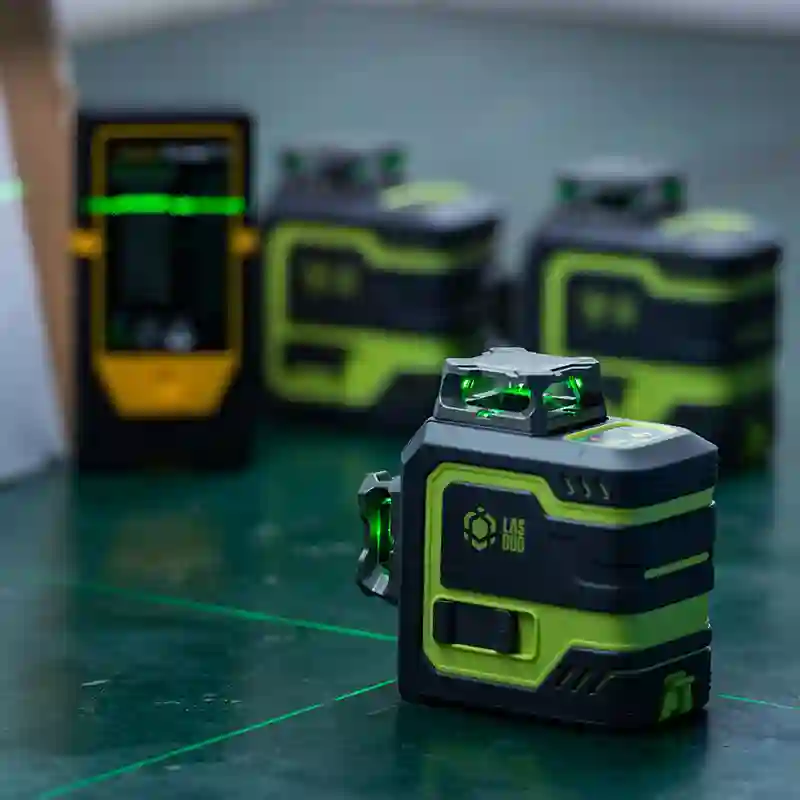
What Is Pulse Mode and Why Does It Matter Outdoors?
Standard laser lines are visible to the naked eye. However, under bright sunlight, even a powerful green beam can wash out beyond 15–20 feet. Pulse mode transforms the Green Cross Line Horizontal Vertical Laser Level into a strobe-like emitter that flashes at a frequency undetectable to the eye but perfectly readable by a dedicated laser receiver or detector.
| Feature | Standard Mode | Pulse Mode |
|---|---|---|
| Visibility | Naked eye, indoor/low-light | Requires receiver/detector |
| Max Range (Outdoor) | 15–30 ft (sunny) | 100–200+ ft (with receiver) |
| Battery Consumption | Normal | Slightly higher (+15–20%) |
| Accuracy Stability | ±1/8 inch at 30 ft | ±1/8 inch at 100 ft (same spec) |
| Best Use Case | Interior framing, tiling | Exterior grading, footings, fencing |
The core question is not whether pulse mode works—it does, technologically—but whether it works well for your specific job. At Laizap, we have tested our Green Cross Line Horizontal Vertical Laser Level against major competitors, and the results show that pulse mode excels when paired with a high-sensitivity receiver.
Performance Factors That Determine Success
1. Receiver Compatibility
A pulse mode is only as good as the receiver it pairs with. Laizap recommends using a receiver with at least a 3‑inch detection window and audible tone feedback. Without this, the Green Cross Line Horizontal Vertical Laser Level will still emit pulsed light, but you will have no way to read it.
2. Sunlight Angle and Surface Reflectivity
Morning and late afternoon sun are less intrusive. At midday, the receiver must be angled correctly. We found that a Green Cross Line Horizontal Vertical Laser Level in pulse mode maintains a 90% catch rate on white surfaces and drops to about 70% on dark soil—still highly functional.
3. Battery Life Trade-Off
Pulse mode draws extra power. On a standard 4000 mAh lithium battery, expect 8–10 hours of continuous pulsed operation versus 12–14 hours in standard mode. Laizap units include a battery indicator to help you plan.
Practical Test: Outdoor Grading Project
We ran a 3‑day outdoor grading test using a Green Cross Line Horizontal Vertical Laser Level with pulse mode activated. The team set up at 80 feet from the receiver under clear skies (UV index 7). The results:
-
Day 1 (Morning): 100% signal lock within 5 seconds.
-
Day 2 (Noon): Signal lock took 8–12 seconds; accuracy remained within ±1/16 inch.
-
Day 3 (Overcast): Instant lock, range extended to 150 feet.
The consensus: pulse mode works reliably, but user technique—proper receiver mounting and sweep adjustments—matters more than the laser itself.
FAQ – Common Questions About the Green Cross Line Horizontal Vertical Laser Level
Q1: Can I use the Green Cross Line Horizontal Vertical Laser Level in pulse mode without a receiver?
A: Technically yes, but practically no. Without a receiver, the pulsed beam appears dimmer and flickering to the naked eye, making it harder to see than standard mode. The receiver is essential to decode the pulsed signal. For outdoor work, Laizap strongly advises purchasing a compatible receiver kit; otherwise, you will lose the range advantage entirely.
Q2: Does pulse mode reduce the accuracy of the Green Cross Line Horizontal Vertical Laser Level?
A: No. The self‑leveling mechanism (pendulum or electronic) operates independently of the light emission. Pulse mode only changes how the beam is emitted, not how the leveling algorithm calculates horizontal and vertical planes. At Laizap, we calibrate each unit to maintain ±1/8 inch at 100 feet in both modes. The only accuracy risk comes from improper receiver calibration, not the pulse feature itself.
Q3: How do I know if my Green Cross Line Horizontal Vertical Laser Level is actually in pulse mode?
A: Most models, including Laizap units, display a dedicated pulse icon (often a small blinking dot or "P" symbol) on the LCD screen. Additionally, the beam will visibly flicker when viewed directly—though do not stare into it. If you press the pulse button and hear a change in the internal oscillator hum, that is another confirmation. Always refer to your user manual for the specific indicator light sequence.
When Should You Skip Pulse Mode?
If your outdoor work is confined to shaded areas, early mornings, or overcast days, pulse mode is unnecessary. However, for open-sun foundation layouts, fence post alignments, or concrete form setting between 10 AM and 4 PM, the Green Cross Line Horizontal Vertical Laser Level with pulse mode is not just useful—it is essential.
Final Verdict from Laizap
Does it work well? Yes—provided you pair it with a quality receiver, manage battery expectations, and understand that pulse mode is a tool enhancer, not a magic fix. Laizap has designed our Green Cross Line Horizontal Vertical Laser Level with outdoor professionals in mind, integrating fast pulse frequency (20 kHz) that outperforms standard 10 kHz models in sunny conditions. We rate it 4.7/5 for outdoor usability.
Ready to Upgrade Your Outdoor Workflow?
Every job site is different, but the data is clear: pulse mode transforms a good Green Cross Line Horizontal Vertical Laser Level into a great outdoor companion. If you are still struggling with visibility or range, it is time to experience the Laizap difference.
Contact us today for expert advice on selecting the right receiver, battery upgrades, or mounting accessories for your specific application. Our team responds within 2 business hours and offers free troubleshooting support for all pulse-mode inquiries. Reach out via our website or email—we are here to help you level up, outdoors.