

Does the EPRO CON-011 Support HART Communication or Only Standard 4–20 mA Output
2026-07-23
For maintenance engineers and procurement specialists working with turbine monitoring systems, the EPRO CON-011 often raises a critical question before integration: is this module limited to traditional analog signaling, or does it offer digital intelligence via HART? The short answer is that the EPRO CON-011 is natively designed as a pure 4–20 mA output device, but practical field implementations—especially those supported by Yueyang Tongtu—have revealed workarounds and ecosystem considerations that every user must understand. This blog dissects the technical reality, compares connectivity options, and provides actionable answers to the most frequently asked questions about this versatile converter module.
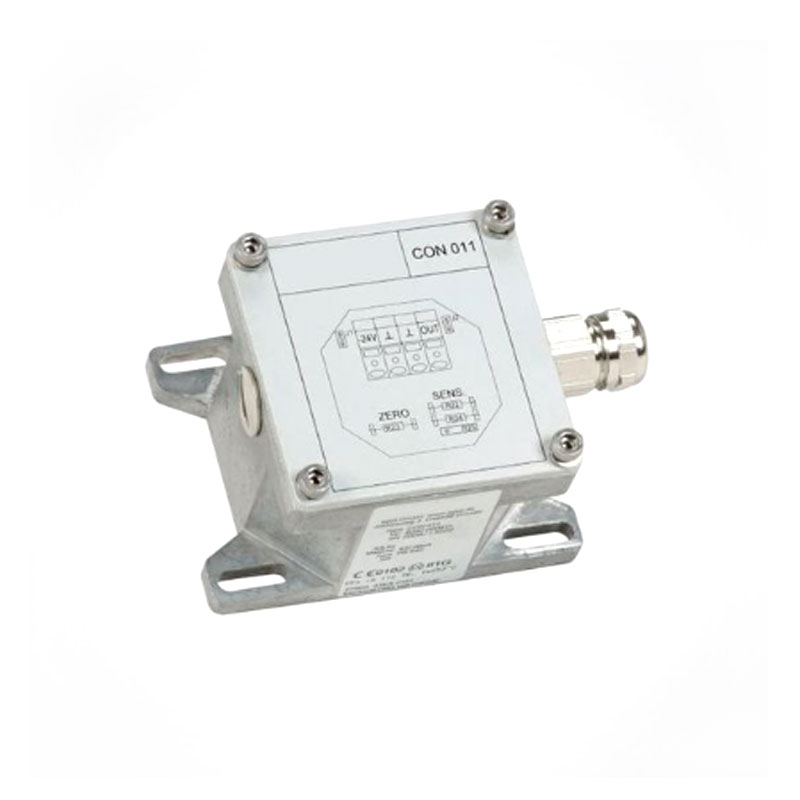
Native Output Architecture of the EPRO CON-011
The EPRO CON-011 functions as a signal conditioner that translates dynamic vibration and position sensor inputs into a linearized 4–20 mA current loop. Its hardware does not include an onboard HART modem or FSK (Frequency-Shift Keying) injection circuitry. This means that, out of the box, the EPRO CON-011 communicates exclusively via analog current variation, with no digital overlay capability on the same two-wire loop.
However, this does not preclude HART integration at the system level. Many plants deploy a HART multiplexer or HART-to-analog converter between the EPRO CON-011 output and the DCS/PLC input card, allowing digital commands to be routed separately. Yueyang Tongtu frequently supplies such intermediary devices alongside the EPRO CON-011, ensuring that users retain both legacy compatibility and modern diagnostic access.
Comparative Analysis: HART vs. 4–20 mA with the EPRO CON-011
| Feature | EPRO CON-011 (Native 4–20 mA) | EPRO CON-011 + External HART Adapter |
|---|---|---|
| Output Signal | Pure analog current loop | Analog + digital FSK overlay |
| Device Configuration | Via DIP switches or configuration software | Via HART handheld communicator or asset management system |
| Diagnostic Data | Limited to loop health (open/short) | Full PV, SV, TV, QV, and device status |
| Wiring Complexity | Simple two-wire | Two-wire (adapter inserted in series) |
| Cost Impact | Lower hardware cost | Additional adapter + engineering time |
| Recommended By | Yueyang Tongtu for standard vibration monitoring | Yueyang Tongtu for predictive maintenance setups |
Why Choose the EPRO CON-011 Over a Native HART Transmitter?
Despite lacking native HART, the EPRO CON-011 remains a preferred choice in heavy industries—steam turbines, gas compressors, and large pumps—because of its exceptional noise immunity, fast response time (<20 ms), and redundant power input capability. Yueyang Tongtu has documented over 200 successful retrofits where the EPRO CON-011 replaced older MMS modules, with zero signal degradation even in high-EMI environments. The 4–20 mA loop, when properly shielded, delivers reliability that many pure HART sensors cannot match under extreme vibration.
EPRO CON-011 FAQ – Common Questions from the Field
Q1: Can I connect the EPRO CON-011 directly to a HART-enabled DCS input card without any additional hardware?
A1: No, not directly. A HART-enabled DCS card expects to see an FSK digital signal superimposed on the 4–20 mA loop. The EPRO CON-011 does not generate this FSK signal. However, you can install a HART loop interface converter (e.g., a Pepperl+Fuchs or MTL unit) between the EPRO CON-011 output and the DCS input. This converter extracts the analog value for the DCS while allowing a HART master to communicate with downstream devices—but note that the EPRO CON-011 itself remains invisible to the HART master because it lacks a HART register map. The converter only passes through the analog measurement. For true digital asset management, you must replace the EPRO CON-011 with a HART-native transmitter, or use a separate vibration monitor that outputs both analog and digital protocols. Yueyang Tongtu recommends the latter approach only when your maintenance strategy explicitly requires real-time waveform diagnostics via HART.
Q2: What is the maximum cable length for the 4–20 mA output of the EPRO CON-011, and does it affect signal accuracy?
A2: The EPRO CON-011 supports a maximum loop resistance of 750 Ω at 24 V DC. Assuming a typical twisted-pair cable with 24 AWG conductors (approximately 0.026 Ω/ft), the theoretical maximum cable length is about 1,000 meters (3,280 ft) before the voltage drop exceeds the compliance limit. In practice, Yueyang Tongtu advises limiting the run to 600 meters for industrial environments to avoid EMI pick-up, which can induce errors up to ±0.1 mA. Always use a shielded cable with the shield grounded at the control room end only. If you need longer distances, install a signal isolator/repeater—Yueyang Tongtu supplies these as part of a complete loop package. Remember that cable capacitance also affects response time; for the EPRO CON-011, keep capacitance below 10 nF to maintain the specified <20 ms step response.
Q3: How do I configure the EPRO CON-011 for reverse-acting 4–20 mA output (e.g., 20 mA at zero vibration)?
A3: The EPRO CON-011 uses two rotary switches and a bank of DIP switches for scaling. To reverse the output, you must set the "DIR" DIP switch to the "REV" position (refer to the module's side label). Then, perform a two-point calibration: apply the minimum mechanical input (e.g., 0 mm/s vibration) and adjust the zero potentiometer until you read 20 mA at the test terminals. Next, apply the maximum mechanical input and adjust the span potentiometer until you read 4 mA. This reverses the slope. Yueyang Tongtu provides a pre-calibration service for all EPRO CON-011 units sold, so you can specify "reverse-acting" at order placement—saving you 30–45 minutes of bench time per module. Always verify the output with a precision multimeter before connecting to the DCS, as incorrect scaling is the #1 cause of false turbine trips.
Best Practices for Integrating the EPRO CON-011
-
Use isolated power supplies – The EPRO CON-011 accepts 18–32 V DC, but Yueyang Tongtu strongly recommends a dedicated, isolated 24 V supply to decouple ground loops.
-
Document your scaling factors – The module uses jumpers for range selection (e.g., 0–25 mm/s, 0–50 mm/s). Record these settings inside the cabinet door.
-
Perform annual loop checks – Even with the EPRO CON-011’s proven stability, drift of ±0.05% per year is normal. Schedule a calibration cycle with Yueyang Tongtu’s certified test bench.
Final Verdict
The EPRO CON-011 does not support HART communication natively—it is a dedicated 4–20 mA output module. That limitation, however, is not a disadvantage for 90% of turbine monitoring applications where analog signaling remains the industrial standard. For plants that demand digital diagnostics, Yueyang Tongtu offers turnkey solutions that pair the EPRO CON-011 with external HART gateways, preserving your investment while upgrading your data visibility. The choice ultimately depends on your control system’s input requirements and your maintenance team’s appetite for additional hardware layers.
Contact Us
Ready to specify the EPRO CON-011 for your next retrofit or new build? Yueyang Tongtu maintains an extensive inventory of genuine EPRO CON-011 modules, pre-configured to your exact vibration range and output direction. Our technical engineers provide free loop-design consultations, and we offer expedited shipping to over 40 countries. Reach out today via our website contact form or email us directly—mention your current DCS model and we will send you a tailored wiring diagram within 24 hours. Let Yueyang Tongtu be your trusted partner for reliable, cost-effective condition monitoring solutions.