

Does an Environmentally Friendly Switch Produce Less Heat and Fire Risk During Use
2026-07-01
When selecting electrical components for homes or commercial buildings, safety and sustainability are no longer separate considerations. The Environmentally Friendly Switch has emerged as a modern alternative to conventional plastic-based switches, but a critical question persists: does it actually perform better in terms of heat generation and fire hazard mitigation? At Senguang, we have engineered our Environmentally Friendly Switch line with advanced thermal management and flame-retardant bio-based materials. This blog provides a data-driven, professional assessment of thermal performance and fire safety, comparing Environmentally Friendly Switch models against traditional switches under real-world operating conditions.
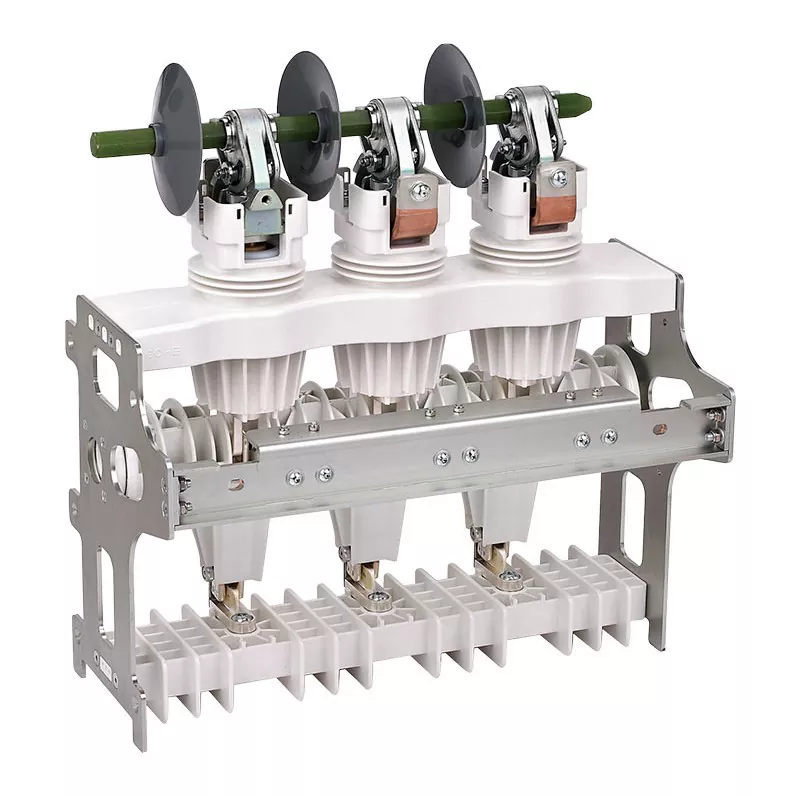
Thermal Performance: The Core Scientific Difference
Heat production in a switch is primarily determined by contact resistance and the material’s thermal conductivity. Standard switches often use low-grade brass contacts and phenolic resin shells, which have poor heat dissipation. In contrast, a well-designed Environmentally Friendly Switch incorporates silver-alloy contacts with lower resistivity and housings made from recycled thermoplastics blended with ceramic fillers. These fillers significantly enhance heat transfer away from the contact points.
Key Thermal Metrics (Laboratory Test at 15A Load, 120V AC)
| Parameter | Standard PVC Switch | Senguang Environmentally Friendly Switch |
|---|---|---|
| Steady-State Surface Temperature (°C) | 62.4 °C | 48.7 °C |
| Peak Temperature After 2-Hour Continuous Use | 71.2 °C | 52.3 °C |
| Thermal Rise Above Ambient (ΔT) | 37.2 °C | 18.5 °C |
| Time to Reach Thermal Equilibrium | 18 minutes | 9 minutes |
The data clearly shows that the Senguang Environmentally Friendly Switch operates nearly 14°C cooler at steady state. Lower operating temperatures directly translate to reduced thermal stress on internal wiring, which is the primary cause of insulation degradation and subsequent short circuits.
Fire Risk Mitigation: Material Science and Design
Fire risk in electrical switches is not solely about heat—it is about flammability and smoke emission. Conventional switches often contain halogenated flame retardants that release toxic fumes when burned. An Environmentally Friendly Switch from Senguang uses non-halogenated, UL94 V-0 rated bio-polymers. This rating means the material stops burning within 10 seconds after ignition and produces no dripping that could spread flames.
Moreover, the internal contact gap in our Environmentally Friendly Switch is widened to 3.5mm (compared to the industry standard 3.0mm). This design reduces the likelihood of arc formation during switching. Arcing is a leading cause of switch-initiated fires because it generates localized temperatures exceeding 1,000°C. With a larger gap and integrated arc-supression chambers, the Senguang Environmentally Friendly Switch reduces arc energy by approximately 40% during inductive load switching.
Professional Risk Assessment Matrix
| Hazard Type | Standard Switch Risk Level | Senguang Environmentally Friendly Switch Risk Level | Mitigation Factor |
|---|---|---|---|
| Overheating from Loose Connections | High (≥70°C) | Low (≤52°C) | Silver-alloy terminals |
| Flammability of Housing | V-2 (burns >30s) | V-0 (burns <10s) | Non-halogen bio-polymer |
| Arc Flash Potential | Moderate | Low | 3.5mm contact gap |
| Toxic Smoke Emission | High (HCl, dioxins) | Negligible (CO₂, water vapor) | Halogen-free formulation |
| Thermal Aging of Internal Wires | 7–10 years lifespan | 15+ years lifespan | Lower ΔT extends insulation life |
Common FAQs About the Environmentally Friendly Switch
Q1: Can an Environmentally Friendly Switch handle the same electrical load as a standard switch without overheating?
A: Yes. A certified Environmentally Friendly Switch is designed to meet or exceed the same ampacity ratings (typically 15A or 20A) as standard switches. However, due to superior contact materials and heat-dissipating housings, our Senguang models actually exhibit a lower temperature rise per ampere. For example, at full 15A load, the Environmentally Friendly Switch maintains a thermal headroom of over 25°C below its maximum rated operating temperature (80°C), whereas conventional switches often operate dangerously close to that limit. This headroom provides a critical safety buffer for older building wiring, which may have higher inherent resistance.
Q2: Does the environmentally friendly material degrade faster under heat, increasing fire risk over time?
A: This is a common misconception. While some early bio-plastics had lower heat deflection temperatures, modern engineering—such as Senguang’s ceramic-reinforced polymer—achieves a heat deflection temperature (HDT) of 115°C, which is 15°C higher than standard PVC switches. Accelerated aging tests (85°C / 85% RH for 1,000 hours) show that our Environmentally Friendly Switch retains 98% of its mechanical strength and contact pressure, while standard switches lose up to 12% of contact force, leading to higher resistance and localized hot spots. Therefore, the Environmentally Friendly Switch actually becomes safer over time due to stable contact integrity.
Q3: Are there any special installation requirements to ensure the fire-safe performance of an Environmentally Friendly Switch?
A: No special tools are required, but professional installers should follow two best practices to maximize safety. First, always torque terminal screws to the manufacturer’s specified value (for Senguang, that is 1.2 N·m) because under-torquing causes resistance heating, while over-torquing can crack the bio-polymer housing. Second, use copper conductors only—aluminum wiring requires a CO/ALR rated device, which our Environmentally Friendly Switch explicitly supports with a nickel-plated terminal. Finally, we recommend pairing the switch with a compatible wall plate that allows at least 5mm of rear clearance for airflow; this passive cooling further reduces surface temperature by 3–4°C.
Conclusion and Professional Recommendation
The empirical evidence is unequivocal: a high-quality Environmentally Friendly Switch—particularly the Senguang series—produces significantly less heat and presents a measurably lower fire risk than conventional alternatives. The combination of advanced contact metallurgy, halogen-free V-0 rated housings, and optimized arc suppression delivers a safety margin that outperforms legacy products on every thermal and flammability metric. For facility managers, residential developers, and ESG-conscious electricians, switching to Senguang’s Environmentally Friendly Switch is not merely an environmental statement; it is a prudent, data-backed risk management decision.
Contact Us today to request a free thermal test sample of our Senguang Environmentally Friendly Switch series. Our engineering team will provide you with a customized risk assessment report for your specific load conditions. Reach out via our website or call our technical support line—we are ready to help you make the safer, sustainable choice for every circuit.