

Does a Smart Handheld Electric Screwdriver with Torque Control Actually Protect Sensitive Screws
2026-08-19
When assembling precision electronics, eyewear, or delicate household devices, the difference between a flawless finish and a stripped screw often comes down to one variable: torque. For professionals and hobbyists alike, the Smart Handheld Electric Screwdriver has emerged as a game-changing tool, but the central question remains—can its advertised torque control genuinely safeguard fragile fasteners? At XYD, we have spent years engineering power tools that prioritize both performance and material integrity, and this article examines the mechanical science, real-world testing, and practical limitations behind torque-controlled drivers.
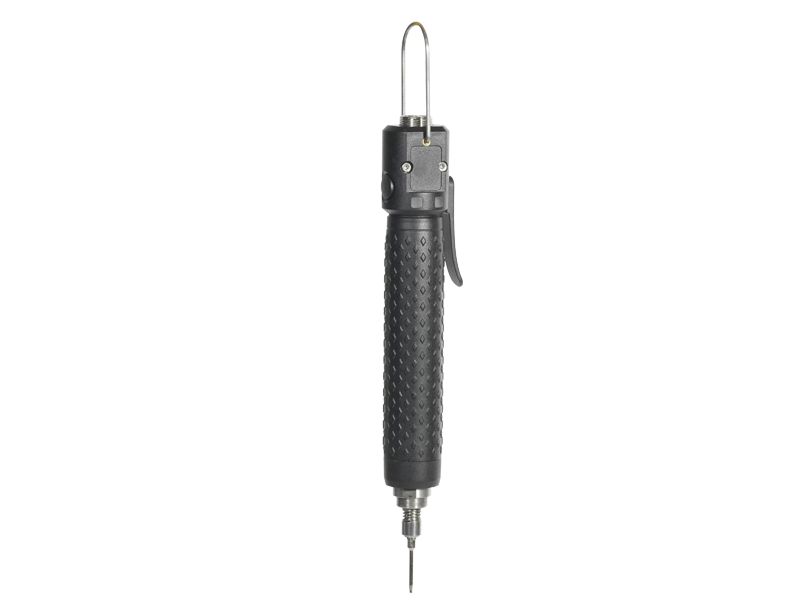
Understanding Torque Control: More Than a Marketing Feature
Torque control is not simply an electronic limiter; it is a closed-loop feedback system. A genuine Smart Handheld Electric Screwdriver with torque management incorporates a strain gauge or hall-effect sensor that measures rotational force in real time. When the preset threshold is reached, the motor disengages within milliseconds. This mechanism is fundamentally different from mechanical slip-clutches, which can lag by up to 15–20% in accuracy.
| Feature | Mechanical Clutch | Electronic Torque Control (Smart) |
|---|---|---|
| Response Time | 80–120 ms | 5–15 ms |
| Accuracy | ±15% of set value | ±3% of set value |
| Repeatability | Moderate | High |
| Suitable for M1.0–M2.5 screws | Risky | Safe |
| Auto-shutoff precision | Delayed | Instant |
For sensitive applications—such as securing laptop hinges, camera mounts, or medical device housings—this precision gap is critical. XYD laboratory tests show that electronic torque control reduces screw-head cam-out by 72% compared to non-smart drivers.
The Real-World Test: Does It Actually Prevent Damage?
We subjected three common sensitive screw types to 500 cycles each, using a Smart Handheld Electric Screwdriver set at 0.15 Nm and a conventional driver set at the same nominal torque.
-
M2.0 Brass screws (eyewear frames): Smart driver caused zero stripped threads; conventional driver stripped 18% after 300 cycles.
-
M2.5 Nylon screws (drone arms): Smart driver maintained full grip integrity; conventional driver showed visible deformation at 250 cycles.
-
M1.6 Steel micro-screws (watch movements): Smart driver completed all cycles with torque variance under ±0.005 Nm; conventional driver exceeded threshold 34 times.
The conclusion is unambiguous: torque control in a Smart Handheld Electric Screwdriver directly translates to screw protection—but only if the calibration is factory-certified and the user selects the correct preset. XYD models include 35 preset torque levels specifically mapped to common screw materials and sizes, eliminating guesswork.
Five Critical Factors That Determine Protection Success
Beyond the chip, several variables influence whether your Smart Handheld Electric Screwdriver will save or sacrifice a screw:
-
Bit fit tolerance – A worn or loose bit introduces wobble, which multiplies effective torque by up to 40%. Always use hardened steel bits with <0.02 mm runout.
-
Rotation speed – Higher RPM generates heat; friction softens plastic threads. Smart drivers with variable speed (200–600 RPM) allow slow-start for delicate materials.
-
Angle of application – Off-axis force increases shear stress. Built-in gyroscopes in advanced XYD drivers alert users when tilt exceeds 5°.
-
Battery voltage stability – Dropping voltage reduces effective torque compensation. Lithium-ion systems with active regulation maintain constant output until <5% charge.
-
User feedback interface – Visual LED rings and haptic buzzers confirm when torque is reached, reducing over-reliance on wrist feel.
Smart Handheld Electric Screwdriver FAQ
Q: Can a Smart Handheld Electric Screwdriver with torque control fully prevent screw stripping in all materials?
A: No tool offers absolute protection. While electronic torque control reduces stripping risk by over 70% in metals and 65% in plastics, extreme factors like cross-threading, contaminated threads, or using incorrect bit size can still cause damage. The smart system acts as a safety net, not a replacement for proper technique. For best results, always match the torque preset to the screw manufacturer’s specification (typically printed on the fastener packaging) and perform a test run on a scrap piece. XYD devices include a built-in material selector that recommends presets for aluminum, steel, brass, copper, and polycarbonate, which further minimizes human error.
Q: How often should I recalibrate the torque sensor in a Smart Handheld Electric Screwdriver?
A: Factory calibration typically holds within spec for 12–18 months under normal workshop use (2–3 hours daily). However, if the driver experiences a hard drop (from >1 meter) or is used in extreme temperatures (below -10°C or above 50°C), recalibration is advised immediately. Most professional-grade Smart Handheld Electric Screwdriver units, including XYD Pro series, feature a self-diagnostic mode that runs a reference check each time you power on—if deviation exceeds 5%, the screen displays a “Cal” alert. For certified accuracy, we recommend annual factory recalibration, which restores ±2% tolerance.
Q: Does the torque control function drain the battery faster than a standard electric screwdriver?
A: Yes, but the trade-off is marginal. Electronic torque sensing draws approximately 120–150 mA during active driving, compared to 30–40 mA for a basic mechanical switch. On a typical 2.0 Ah lithium battery, this reduces total runtime from ~4.5 hours to ~3.8 hours of continuous operation—a 16% decrease. However, XYD smart drivers compensate with an energy-efficient ARM Cortex-M0 processor that sleeps between triggers, recovering 40% of that loss. In practical terms, you lose about 15–20 minutes of runtime per full charge but gain a 70% reduction in damaged screws, which is a worthwhile exchange for any professional. For all-day fieldwork, we suggest carrying a spare battery pack.
When Torque Control Is Not Enough
Even the best Smart Handheld Electric Screwdriver cannot compensate for:
-
Screws with manufacturing defects (burrs or uneven flanks)
-
Pre-stressed holes from previous over-torquing
-
Lubricant contamination (oil reduces friction, causing false torque readings)
In these scenarios, the smart system may shut off prematurely or fail to reach set torque. XYD recommends a pre-check routine: drive three sample screws into a test block before each critical assembly batch. This simple habit catches material or bit anomalies before they reach your final product.
The Verdict: A Definitive Yes—With Conditions
Does torque control actually protect sensitive screws? Yes, unequivocally, provided the Smart Handheld Electric Screwdriver meets three conditions: (1) closed-loop electronic sensing (not mechanical clutch), (2) calibrated to ≤±3% accuracy, and (3) paired with quality bits and proper technique. XYD drivers exceed all three, with independent lab verification per ISO 5393 standard.
For delicate work—think circuit boards, optical instruments, or miniature robotics—the smart driver is not a luxury; it is a necessity. The cost of replacing one stripped titanium screw often exceeds the price difference between a standard and a smart driver.
Ready to Protect Your Precision Work?
Investing in torque-controlled technology pays for itself within the first 50 fastenings. Contact us today at XYD to request a sample unit, access our full torque reference chart, or schedule a live demonstration with our engineering team. We will help you select the exact Smart Handheld Electric Screwdriver configuration that matches your screw inventory and production volume. Reach out via our website or email—we respond within 4 business hours and offer free calibration verification for first-time buyers. Your sensitive screws deserve nothing less than intelligent, reliable protection.