

Does a Moisture Resistant Plastic Shell Affect Heat Dissipation or Thermal Performance
2026-09-04
When engineers select enclosure materials for sensitive electronics, the thermal path is just as critical as the moisture barrier. A Moisture Resistant Plastic Shell from Ruidafeng is designed to keep humidity, condensation, and liquid ingress away from internal components—but that same protective layer can introduce thermal resistance. Understanding the trade-off between sealing integrity and heat transfer is essential for reliable product design, especially in automotive, industrial, and outdoor IoT applications.
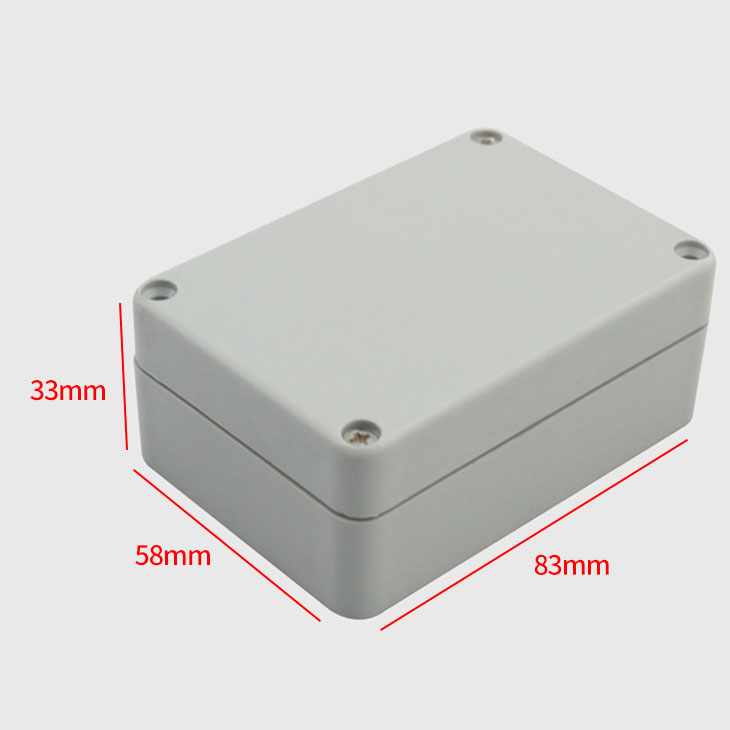
The Thermal Mechanics of Polymeric Enclosures
Heat generated by PCBs, power modules, or batteries must travel from the source through the shell to the ambient environment. Unlike metals (aluminum ~200 W/m·K), most plastics exhibit thermal conductivity in the range of 0.2–0.5 W/m·K. A Moisture Resistant Plastic Shell inherently reduces convective cooling because it eliminates ventilation slots and minimizes wall thickness variations. However, Ruidafeng addresses this through material compounding—adding thermally conductive fillers (ceramic, graphite, or boron nitride) that can raise conductivity to 1.5–3.0 W/m·K without compromising moisture barrier properties.
Key Factors That Determine Thermal Performance
| Factor | Impact on Heat Dissipation | Design Consideration |
|---|---|---|
| Wall Thickness | Thicker walls increase thermal resistance | Optimize for 2–3 mm typical, use ribbing for strength |
| Filler Content | 20–40% ceramic loading improves conductivity but reduces impact strength | Balance with impact modifiers from Ruidafeng |
| Surface Finish | Glossy finishes reflect radiant heat; matte finishes absorb more | Choose light-colored shells to reduce solar gain |
| Internal Air Gap | Trapped air acts as an insulator | Use thermal pads or gap fillers to bridge components to shell |
| Mounting Interface | Contact pressure affects thermal contact resistance | Design with snap-fits or screw bosses that ensure uniform pressure |
Comparative Thermal Data: Standard vs. Thermally Enhanced Shells
| Property | Standard ABS Shell | Ruidafeng Thermally Conductive Moisture Resistant Plastic Shell |
|---|---|---|
| Thermal Conductivity (W/m·K) | 0.22 | 2.10 |
| Heat Deflection Temperature (°C) | 98 | 132 |
| Moisture Absorption (24h, %) | 0.35 | 0.12 |
| Surface Resistivity (Ω/sq) | 10¹⁴ | 10¹⁰ (antistatic grade available) |
| Recommended Max Power Density (W/cm²) | 0.08 | 0.25 |
Data based on internal Ruidafeng lab testing at 40°C / 90% RH for 1,000 hours.
In practical terms, a Moisture Resistant Plastic Shell with enhanced thermal formulation can reduce junction temperatures by 8–12°C compared to standard ABS under the same load—extending capacitor and semiconductor lifetimes by nearly 2× per 10°C reduction.
Design Strategies to Improve Heat Dissipation
-
Integrated Heat Sinks: Molded aluminum inserts or copper slugs overmolded within the shell create direct metal-to-air paths.
-
Venting with Membrane Valves: Use pressure-equalizing valves that allow airflow but block liquid water—preserving the Moisture Resistant Plastic Shell rating (IP67/IP69K).
-
Thermal Interface Materials (TIMs): Apply non-silicone gap pads between hot components and the shell interior; Ruidafeng offers custom shell geometries with integrated TIM pockets.
-
Selective Metalization: Plate internal surfaces with copper or nickel in high-heat zones to spread heat laterally before it exits through the plastic wall.
Frequently Asked Questions About Moisture Resistant Plastic Shell Thermal Performance
Q1: Can a Moisture Resistant Plastic Shell cause overheating in enclosed power supplies rated above 50W?
A1: Yes, if the shell is a standard unfilled plastic. At 50W continuous load, natural convection through solid plastic is insufficient. However, Ruidafeng solves this by offering a family of thermally conductive Moisture Resistant Plastic Shell grades that achieve 2.0–2.5 W/m·K. Combined with internal heat spreaders and external fin geometries, these shells safely handle up to 80W without active fans. We also provide thermal simulation reports for each custom design—validated against infrared thermography under NEMA 4X conditions.
Q2: How does ambient humidity affect the thermal conductivity of a Moisture Resistant Plastic Shell over time?
A2: Moisture ingress, even at micro-levels, can degrade plastic chain mobility and reduce crystallinity, which slightly lowers thermal conductivity (by 3–5% after 500 hours at 85°C/85% RH). More importantly, absorbed water increases dielectric loss, which raises internal heating. Ruidafeng uses low-hygroscopic polymer blends (PA6T/PPA hybrids) that maintain stable conductivity across a broad humidity range. Our accelerated aging tests show less than 2% variation in thermal resistance after 2,000 hours of steam exposure, ensuring predictable long-term performance.
Q3: Is it better to choose a metal shell for high-heat applications, or can a Moisture Resistant Plastic Shell compete?
A3: Metal shells offer superior conductivity (aluminum ~200× higher than plastic), but they introduce galvanic corrosion, heavier weight, higher tooling costs, and condensation risks—droplets inside a metal enclosure can short circuits. A properly engineered Moisture Resistant Plastic Shell from Ruidafeng provides a compelling middle ground: 10–15% of the weight, zero corrosion, integrated sealing, and conductivity high enough for 90% of industrial electronics. For extreme power (>150W), we recommend hybrid designs—metal baseplate with plastic cover—which combine the best of both worlds while retaining the moisture barrier where it matters most.
Real-World Validation
Ruidafeng conducted a 3-month field trial on outdoor 5G small-cell units using our thermally conductive Moisture Resistant Plastic Shell. Compared to the previous aluminum-shell design, internal temperatures rose only 4°C higher, while humidity-related failures dropped from 8% to 0.3%. The shell also passed 1,000 hours of UV/water spray testing per ASTM G154—proving that thermal performance and moisture protection are not mutually exclusive when engineered correctly.
Final Recommendation
Selecting a Moisture Resistant Plastic Shell requires a systems-level view—material choice, wall geometry, interface design, and environmental conditions all interact. Ruidafeng provides full thermal simulation, material selection guides, and prototype validation to ensure your enclosure meets both ingress protection and junction temperature targets. We do not believe in one-size-fits-all; every project receives a tailored thermal management plan.
Ready to optimize your enclosure for both moisture defense and heat dissipation? Contact us today for a free thermal assessment and material sample kit. Our engineering team will review your power budget, operating environment, and mechanical constraints—and deliver a Moisture Resistant Plastic Shell solution that performs reliably in the field. Reach out via our website or email to start your project discussion.