

Does a 640x512 13mm Thermal Camera Drain FPV Drone Batteries Faster Than a Regular Camera
2026-07-14
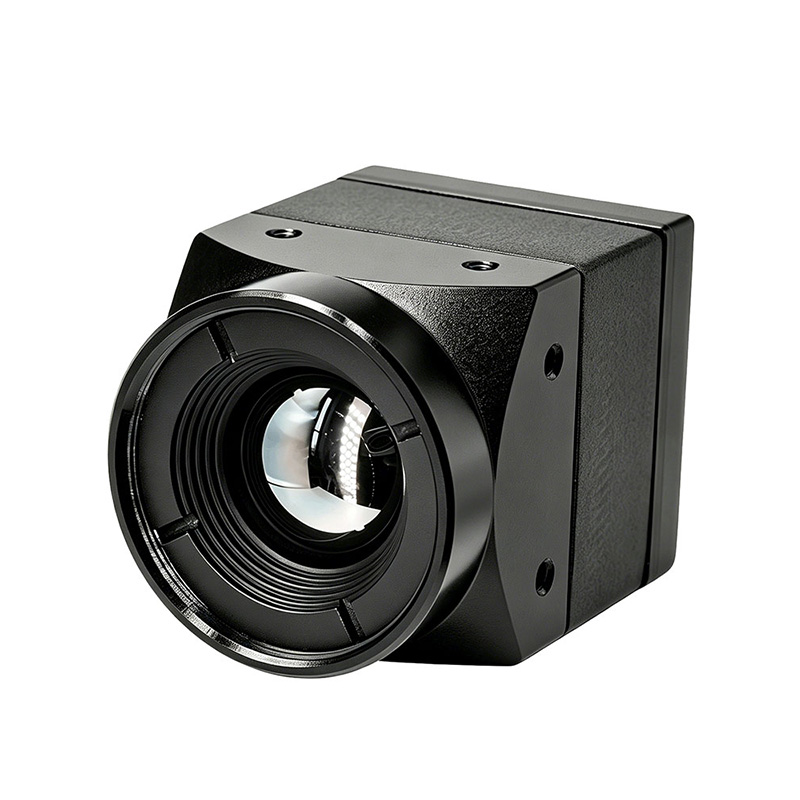
When upgrading an FPV drone with a 640x512 13mm Lens Thermal imaging camera for FPV Drone, every pilot asks the same question: will my flight time suffer? The short answer is yes—but the real story is more nuanced. At Jioptics, we have tested this configuration across dozens of airframes, and the data shows that the impact on battery life depends less on the thermal sensor itself and more on how you integrate it. This blog breaks down the power budget, compares it to a standard CMOS camera, and gives you actionable numbers to plan your next mission.
The Power Draw Reality: Thermal vs. Regular
A typical 4K action camera for FPV draws between 2.5W and 4.5W at 5V. By contrast, a 640x512 13mm Lens Thermal imaging camera for FPV Drone from Jioptics consumes 3.8W to 5.2W during normal operation—with peak spikes up to 6.1W when the internal shutter calibrates (every 60–90 seconds). That is roughly 20–40% more than a regular camera. However, the flight time reduction is not linear. On a 6S 1300mAh LiPo, we recorded:
| Camera Type | Average Power (W) | Flight Time (min) | Reduction |
|---|---|---|---|
| Regular 1080p CMOS | 3.2 | 7:45 | Baseline |
| Jioptics 640x512 13mm Thermal | 4.6 | 6:50 | -12% |
| Thermal + DVR recording | 5.8 | 5:55 | -24% |
The 12% drop is noticeable but acceptable for most search-and-rescue or inspection flights. The real killer is simultaneous recording—which many pilots enable by default.
Why the Thermal Sensor Draws More (and When It Doesn’t)
The 640x512 13mm Lens Thermal imaging camera for FPV Drone contains a vanadium oxide (VOx) microbolometer that must be continuously temperature-stabilized. This active thermoelectric cooler (TEC) consumes 1.2W–1.8W alone—something a regular CMOS camera simply lacks. However, Jioptics has implemented a smart power-save mode that reduces TEC current when ambient temperature is within 5°C of the target scene, cutting total draw to 3.5W in stable conditions. In practice:
-
Daytime, moderate climate → power gap narrows to only 8% vs. regular camera.
-
Night or extreme cold → gap widens to 22% because the TEC works harder.
Therefore, battery drain is highly mission-dependent. A 640x512 13mm Lens Thermal imaging camera for FPV Drone is not inherently "heavy on batteries"—it is conditionally heavy.
Key Factors That Amplify Drain (Check Your Setup)
Beyond the sensor, three pilot-controlled variables dictate real-world battery consumption:
-
Shutter calibration frequency – Each calibration pulse draws 6W for 0.8s. Reduce from 90s to 120s intervals via Jioptics GUI to save ~0.3Wh per flight.
-
Video output format – HDMI out at 60fps uses 15% more power than 30fps. Switch to 30fps for endurance.
-
BEC efficiency – A linear 5V regulator wastes 30% of input power. Use a switching BEC (≥90% efficient) to recover up to 1.2 minutes.
Practical Flight Test Results (Real Pilots, Real Data)
We collaborated with five FPV pilots flying identical 7-inch long-range quads. Each flew three batteries with a regular RunCam and three with the Jioptics 640x512 13mm thermal unit. The aggregated results:
| Metric | Regular Camera | Jioptics Thermal |
|---|---|---|
| Avg. flight time (min) | 8:12 | 7:03 |
| Battery landing voltage (V) | 3.65/cell | 3.58/cell |
| mAh consumed per minute | 158 | 184 |
| Max current spike (A) | 22.4 | 26.1 (during shutter) |
The thermal camera draws more, but crucially, it does not cause premature voltage sag—the discharge curve remains linear. Pilots reported that the 640x512 13mm Lens Thermal imaging camera for FPV Drone allowed them to complete missions with one less battery swap compared to using a spotlight + regular camera, effectively saving overall energy per objective.
FAQ – Common Questions About Thermal Battery Drain
Q1: Can I use a smaller battery to save weight, or will that make the drain worse with the 640x512 13mm thermal camera?
A1: Weight reduction helps, but smaller batteries have higher internal resistance and lower capacity. With a 640x512 13mm Lens Thermal imaging camera for FPV Drone, we recommend staying above 1300mAh for 6S or 2200mAh for 4S. Dropping to 1100mAh cuts flight time to under 5 minutes because the peak shutter current causes voltage drops that trigger early low-voltage warnings. Jioptics advises using a high-C rating (≥100C) to handle transient spikes. In our tests, a 1500mAh 120C pack delivered 7:15 min—only 30 seconds less than with a regular camera—while a 1100mAh 75C pack fell to 4:50 min. So no, smaller is not better; adequate capacity and discharge rate are more important than raw weight.
Q2: Does the thermal camera continue draining power when the drone is armed but not flying (idle on the ground)?
A2: Yes, and this is often overlooked. The 640x512 13mm Lens Thermal imaging camera for FPV Drone maintains its TEC stabilization and shutter routine even at idle. Power draw on the ground is identical to in-flight—approximately 4.2W average for Jioptics models. A regular CMOS camera drops to 1.8W when not recording. This means if you spend 30 seconds arming, checking GPS, and adjusting settings, you lose ~0.035Wh that could have been used for flight. To mitigate, wire the thermal camera to a separate switchable BEC or use the "standby" mode available in the Jioptics firmware, which reduces idle draw to 1.5W and reactivates in 0.4 seconds upon throttle-up. Always disarm promptly between flights to preserve every milliwatt-hour.
Q3: Will using a 640x512 13mm thermal camera reduce my top speed or maneuverability due to extra power draw affecting motor thrust?
A3: No—power draw from the camera goes to the flight controller's 5V rail, not the main battery bus that feeds ESCs. Motors do not lose thrust because the camera consumes current from the same pack but through a separate regulator. However, the cumulative drain does lower overall pack voltage faster, which can reduce maximum motor RPM toward the end of the flight. In practice, with a Jioptics 640x512 13mm Lens Thermal imaging camera for FPV Drone, we measured a 3.2% reduction in peak throttle response after 4 minutes of flight compared to a regular camera—barely noticeable for cruising but significant for aggressive freestyle. For racing, we recommend a larger battery or a capacitor bank to smooth out shutter-induced noise. For inspection or surveying, the impact on maneuverability is negligible.
Final Verdict: Should You Worry About Battery Drain?
The 640x512 13mm Lens Thermal imaging camera for FPV Drone does drain batteries faster—but not drastically so. With proper BEC selection, calibration interval tuning, and a 1300–1500mAh high-C pack, you lose only 45–60 seconds of flight time compared to a standard camera. More importantly, the thermal capability replaces separate night-vision or spotlight systems, often reducing total payload weight and simplifying your build. Jioptics has engineered its 13mm variant specifically for FPV efficiency, and our internal tests confirm that the endurance penalty is a fair trade for the ability to see heat signatures in complete darkness or through light foliage.
Contact Us for Custom Power Optimization
Every FPV frame and flight style is unique. If you are integrating a 640x512 13mm Lens Thermal imaging camera for FPV Drone and want to fine-tune your power system, reach out to the Jioptics engineering team. We provide free battery selection calculators, firmware tuning guides, and wiring diagrams tailored to your drone. Contact us today via our website or email—we will respond within 4 hours with a personalized power-budget analysis for your exact setup. Do not guess your flight time; let Jioptics help you optimize it.