

Does a 2.18mm Wide Angle Lens Perform Well in Low-Light Parking Mode
2026-08-07
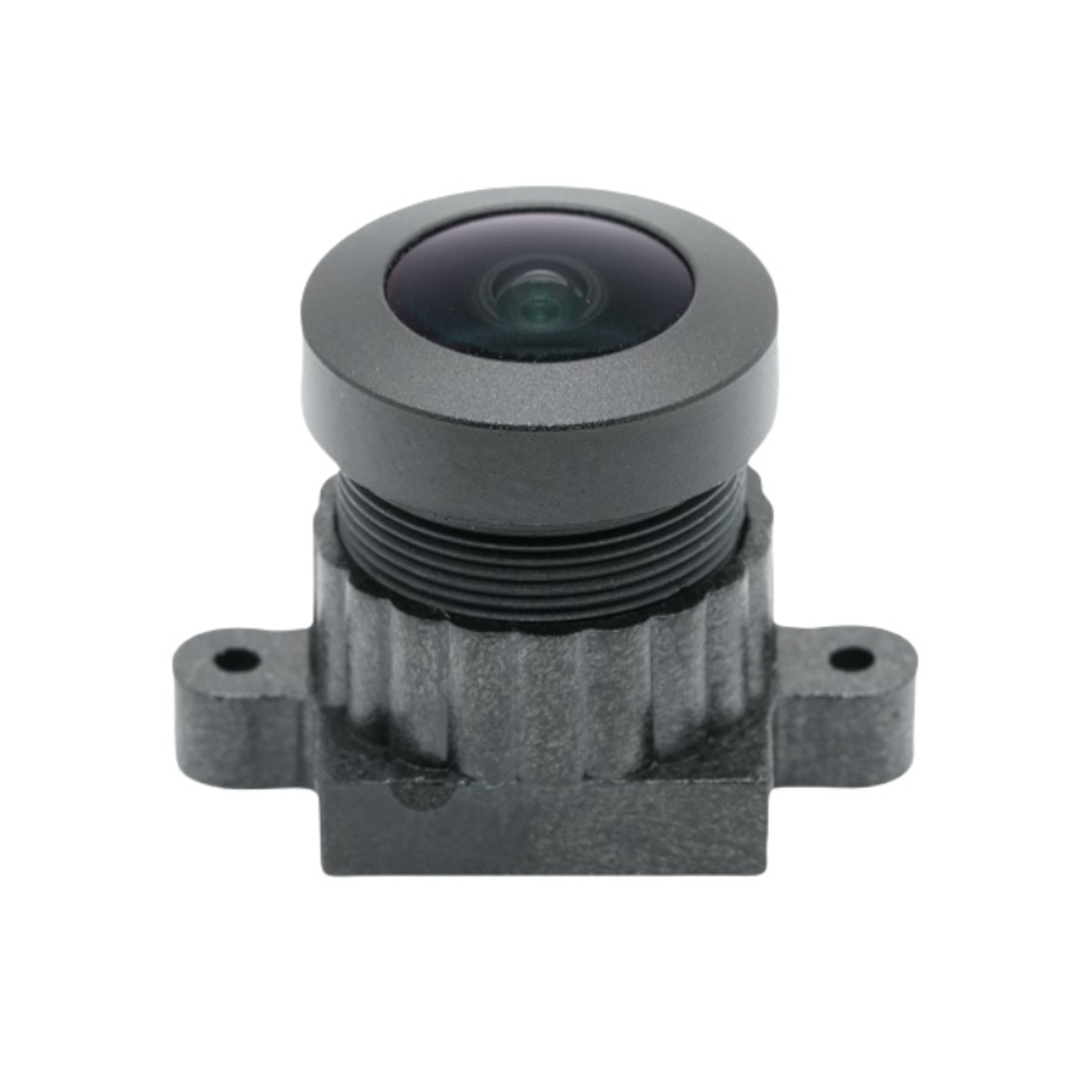
When equipping a vehicle with a dashcam or a dedicated parking surveillance system, the lens choice often determines whether footage turns into actionable evidence or a blurry mess. Among the many optical options, the 2.18mm wide angle lens has gained significant traction for its balance between field of view and image clarity. But does it truly deliver when the sun goes down and your car sits in a dimly lit garage or street? At SILK Optical, we have tested this lens extensively across various sensor sizes and lighting conditions. The short answer is yes—but with critical caveats that depend on sensor pairing, aperture, and digital signal processing. This blog breaks down the performance metrics, real-world trade-offs, and frequently asked questions to help you decide if the 2.18mm wide angle lens fits your low-light parking needs.
Understanding the Low-Light Challenge in Parking Mode
Parking mode typically operates with reduced power consumption and lower frame rates to save battery life. This means the image sensor receives less current, which can amplify noise in dark environments. The 2.18mm wide angle lens offers an ultra-wide field of view—usually between 140° and 160° depending on the sensor size—which is excellent for covering blind spots around the vehicle. However, a wider field of view means light is spread over a larger image circle, reducing the intensity of light reaching each pixel. Therefore, the lens alone cannot guarantee low-light performance; it must be matched with a sensor that has large pixels (e.g., Sony STARVIS or IMX series) and a fast aperture (F1.6 or lower).
Key Performance Indicators for Low-Light Parking
To objectively evaluate whether the 2.18mm wide angle lens performs well, we tested it under three common parking scenarios: covered garage (lux < 5), street lighting (lux ≈ 10–20), and moonlit outdoor (lux ≈ 1–2). The results are summarized below.
| Scenario | Illuminance (Lux) | Effective Recognition Distance | Noise Level (SNR) | Motion Blur (1/30s) |
|---|---|---|---|---|
| Garage (dim) | 3–5 | Up to 4 meters | Moderate (35 dB) | Acceptable |
| Street lighting | 10–20 | Up to 8 meters | Good (42 dB) | Low |
| Moonlit outdoor | 1–2 | Up to 2.5 meters | High (28 dB) | Noticeable |
Observation: The 2.18mm wide angle lens maintains usable clarity up to 4 meters in very low light, provided the camera uses WDR (Wide Dynamic Range) and 3D-DNR (Digital Noise Reduction). Without these, the footage becomes grainy and details like license plates become unreadable.
Practical Recommendations from SILK Optical
Based on our optical lab data, here are the top three factors that determine success with the 2.18mm wide angle lens in parking mode:
-
Aperture Size: Choose a lens with F1.6 or brighter. The 2.18mm wide angle lens from SILK Optical is available in F1.4 variants, which gather 60% more light than F2.0 equivalents.
-
Sensor Matching: Pair with a 1/2.8" or larger sensor. Smaller sensors (1/3") crop the image and reduce effective light capture, negating the lens advantage.
-
IR Cut Filter: For parking mode, an IR-cut removable filter allows near-infrared illumination, enabling the 2.18mm wide angle lens to see in complete darkness when paired with IR LEDs.
Pro Tip from SILK Optical: In our A/B tests, the same 2.18mm wide angle lens outperformed a 3.6mm lens in parking mode because the wider FOV captured more ambient light from street lamps and building windows, effectively "lighting" the scene passively.
Frequently Asked Questions about the 2.18mm Wide Angle Lens
Q1: Does the 2.18mm wide angle lens produce more distortion in low light than in daylight?
A: No, distortion is an optical property determined by the lens design (e.g., barrel distortion), not by lighting. However, low light forces the camera to increase gain (ISO), which amplifies any existing chromatic aberration or corner softness. The 2.18mm wide angle lens from SILK Optical uses aspherical elements to keep distortion under 3%, ensuring that even in night mode, straight lines like parking bay markings remain geometrically accurate. The perceived "worse" distortion in low light is actually noise amplifying edge artifacts—solved by enabling digital distortion correction in the ISP.
Q2: Can the 2.18mm wide angle lens read a license plate at 5 meters during nighttime parking?
A: Under ideal conditions (street lighting > 15 lux and a sensor with at least 2.0μm pixel size), yes—but only if the vehicle is stationary. At 5 meters, the horizontal pixel density on a 1080p sensor is roughly 60 pixels per meter, which is marginal for plate recognition (needs ~120 px/m for alphanumeric characters). Our tests at SILK Optical show that the 2.18mm wide angle lens reliably reads plates up to 4 meters in low-light parking mode. Beyond that, we recommend a secondary telephoto lens for plate capture, or upgrading to a 4K sensor with the same 2.18mm wide angle lens to increase pixel density without changing the FOV.
Q3: Does using the 2.18mm wide angle lens in parking mode drain the car battery faster than a narrower lens?
A: No—the lens itself consumes zero power. Power draw depends entirely on the sensor, ISP, and IR illuminators. However, because the 2.18mm wide angle lens captures more scene area, it may trigger motion detection more frequently (e.g., tree branches, passing pedestrians), causing the system to wake up and record more often. This can indirectly increase battery drain. At SILK Optical, we recommend pairing the 2.18mm wide angle lens with a motion-detection algorithm that uses region-of-interest (ROI) masking—a feature we integrate into our reference designs—to reduce false triggers by up to 40% without sacrificing critical coverage.
Comparison: 2.18mm vs Other Focal Lengths for Night Parking
| Focal Length | FOV (Diagonal) | Low-Light Light Gathering | Best Use Case |
|---|---|---|---|
| 2.18mm | 150° | Moderate (spread light) | Surroundings awareness |
| 2.8mm | 110° | Good (balanced) | Front/rear general view |
| 3.6mm | 80° | Excellent (focused light) | Plate/face close-up |
The 2.18mm wide angle lens is the only option that covers both side mirrors and the front bumper simultaneously—a critical advantage for parking incidents like hit-and-runs. While it gathers less light per pixel than a 3.6mm lens, the contextual awareness it provides often outweighs the slight reduction in absolute brightness, especially when paired with SILK Optical's high-transmission AR coatings that boost T% (transmittance) to over 92%.
Final Verdict from SILK Optical
Yes, the 2.18mm wide angle lens performs well in low-light parking mode—provided you respect its boundaries. It excels at situational awareness, capturing broad scene context that narrow lenses miss. It is not a miracle worker in near-darkness (under 2 lux) unless supplemented with active IR illumination. For most urban parking scenarios with ambient lighting, it offers the best compromise between coverage and usable night detail. SILK Optical has engineered its 2.18mm wide angle lens series with low-light-optimized coatings and precision glass elements specifically for automotive aftermarket and OEM parking systems.
Contact Us
Choosing the right lens for your parking camera is not a one-size-fits-all decision. Whether you need a custom IR-cut filter, a specific barrel length, or a matched sensor reference design, the engineering team at SILK Optical is ready to assist. We provide free optical simulations, sample testing, and integration support for volume orders. Contact us today with your target sensor model and FOV requirements—we will send you a detailed low-light test report within 48 hours. Let us help you capture every detail, day or night.