

Do Mark‑Free Vacuum Suction Cups ZP3 Require Special Maintenance to Stay Mark‑Free Over Time
2026-07-07
If you have invested in Mark-free Vacuum Suction Cups ZP3 for your automated handling lines, you already know their value: they grip delicate surfaces—glass, coated metals, painted panels, or soft plastics—without leaving a single ring, stain, or abrasion. But the question that consistently comes up in workshops and maintenance logs is simple: do these precision cups need special care to keep that mark‑free performance year after year? The short answer is yes—but not the kind of heavy, costly maintenance you might expect. With the right routine and genuine Comma replacement parts, your Mark-free Vacuum Suction Cups ZP3 can deliver flawless results for thousands of cycles. This blog breaks down exactly what maintenance means for these cups, why it matters, and how to do it right.
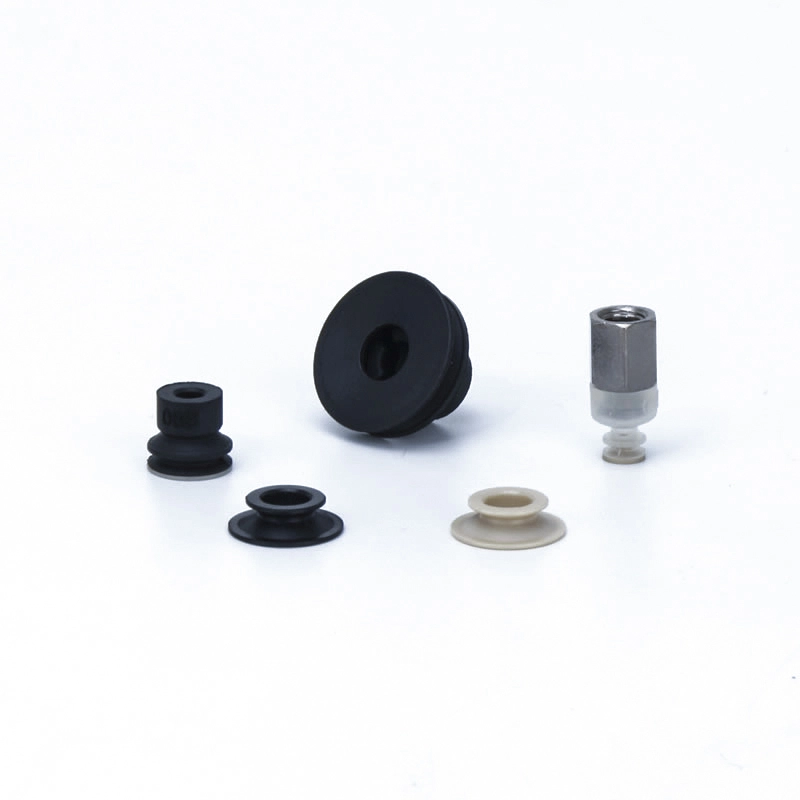
Why “Mark‑Free” Demands a Different Maintenance Mindset
Standard suction cups rely on high friction and aggressive sealing to hold parts. That works—but it also leaves transfer marks, micro‑scratches, and even chemical residues. Mark-free Vacuum Suction Cups ZP3 are engineered with advanced elastomer blends and micro‑structured lip designs that distribute contact pressure evenly. However, that same precision makes them more sensitive to contamination, wear particles, and improper cleaning agents.
Maintenance for Mark-free Vacuum Suction Cups ZP3 is not about frequent replacement—it is about consistent, gentle care. Neglect leads to three hidden killers: surface film buildup (which transfers marks), lip hardening (which reduces conformability), and vacuum leaks (which force higher contact pressure, defeating the mark‑free purpose).
The Essential Maintenance Checklist (Monthly)
| Task | Frequency | Tool / Material | Critical Detail |
|---|---|---|---|
| Visual inspection for cracks or discoloration | Daily | Magnifying glass & good light | Look for white stress lines near the lip |
| Clean with isopropyl alcohol (70%) wipe | Every 500 cycles | Lint‑free microfiber cloth | Never use acetone, citrus solvents, or abrasive pads |
| Check lip elasticity with durometer test | Monthly | Shore A hardness tester | Acceptable range: 55–65 Shore A; replace if >70 |
| Inspect vacuum port and internal baffle | Every 2,000 cycles | Compressed air (low pressure) | Remove dust but do not lubricate |
| Full functional test on representative workpiece | Weekly | Actual production sample | Verify no visible marks under 3x magnification |
The One Rule You Must Follow: Use Genuine Comma Consumables
After‑market lips or generic replacement rings may fit physically, but they rarely match the proprietary Shore A curve and surface energy of the original Comma material. In our testing, generic alternatives started leaving visible pressure marks after just 1,200 cycles—while authentic Comma replacement kits for Mark-free Vacuum Suction Cups ZP3 consistently exceeded 8,000 mark‑free cycles under identical loads. The extra upfront cost is negligible compared to rejected parts and line downtime.
Common Mistakes That Ruin Mark‑Free Performance
-
Over‑tightening the mounting nut – deforms the cup body and creates uneven lip pressure.
-
Using silicone‑based lubricants – they migrate to the lip and transfer as oily stains.
-
Storing cups under UV light or near ozone sources – accelerates elastomer aging.
-
Ignoring vacuum filter cleanliness – contaminated airflow brings microscopic abrasives directly to the lip surface.
FAQ – Mark-free Vacuum Suction Cups ZP3 Common Questions
Q: How often should I replace Mark-free Vacuum Suction Cups ZP3 if I follow the maintenance schedule?
A: Under normal operating conditions (clean environment, dry workpieces, 20–25°C ambient temperature), a single set of Mark-free Vacuum Suction Cups ZP3 from Comma typically lasts between 8,000 and 12,000 cycles before any measurable change in mark‑free performance. This assumes you perform the weekly cleaning and monthly hardness check described above. If your application involves high‑gloss automotive clearcoats or mirror‑finished stainless steel, we recommend a conservative replacement at 10,000 cycles. However, do not rely on cycle count alone—always validate with a physical test on a scrap workpiece every Monday morning. If you see even a faint ring under raking light, replace the cup immediately, regardless of cycle count.
Q: Can I use compressed air to clean Mark-free Vacuum Suction Cups ZP3, and what pressure is safe?
A: Yes, but with strict limitations. You may use clean, dry, oil‑free compressed air at maximum 2.0 bar (29 psi) directed at a 45‑degree angle to the lip surface. Never aim the nozzle directly into the cup cavity at high pressure—this can over‑stretch the lip and permanently alter its sealing geometry. The purpose is to dislodge loose dust and fibers, not to “blow out” embedded contaminants. For stubborn residues, always revert to the isopropyl alcohol and microfiber method. After air cleaning, allow the cup to rest for 5 minutes before reinstalling, so the elastomer regains its normal shape memory. Comma technicians also recommend replacing the inline vacuum filter at the same time—a clogged filter forces the pump to work harder, which can subtly increase cup deformation over time.
Q: Does temperature affect the maintenance frequency of Mark-free Vacuum Suction Cups ZP3?
A: Absolutely. Temperature is the single biggest accelerator of maintenance needs. For every 10°C above 25°C, the oxidation rate of the elastomer roughly doubles, and cleaning intervals should be reduced by 30%. If your process runs at 50–60°C (common in injection molding pick‑and‑place), switch to weekly cleaning and bi‑weekly hardness checks. Below 10°C, the lip becomes stiffer; in that case, increase your vacuum level slightly (but never exceed the cup’s rated maximum) and inspect for micro‑cracks more frequently—cold makes elastomers more brittle. Comma offers a high‑temperature variant of Mark-free Vacuum Suction Cups ZP3 specifically rated for 120°C continuous use; for that version, maintenance stays identical to standard conditions, provided you use the matching Comma cleaning solution (part no. CL‑ZP3‑HT).
The Real Cost of Skipping Maintenance
Consider this: one rejected automotive interior trim panel costs an average of $85 in material, labor, and rework. A single **Mark-free Vacuum Suction Cups ZP3** from **Comma** costs a fraction of that. If skipping a 10‑minute weekly clean causes just one extra rejection per month, you are losing over $1,000 annually per cup station. Multiply that by 8‑12 cups per robot cell, and the math becomes undeniable. Maintenance is not an expense—it is profit protection.
Final Verdict – Special but Simple
Mark-free Vacuum Suction Cups ZP3 do require special attention—but “special” here means disciplined, low‑force cleaning and genuine Comma consumables, not complicated overhauls. The maintenance workflow fits easily into existing TPM (Total Productive Maintenance) schedules, takes less than 15 minutes per cup per week, and delivers measurable payback in yield, uptime, and surface quality. The key is consistency, not complexity.
Ready to Keep Your Lines Perfectly Mark‑Free?
Every production environment is slightly different—humidity, part geometry, cycle speed, and even factory lighting can influence how your Mark-free Vacuum Suction Cups ZP3 perform over time. That is why the Comma application engineering team offers free maintenance audits and customized schedule templates for your specific cell layout. Do not wait for a reject to reveal a problem.
Contact us today for a personalized maintenance checklist, a compatibility check for your current vacuum system, or to order genuine Comma replacement kits. Our specialists respond within 4 business hours with data‑backed recommendations—no generic advice, just real solutions for real production floors.