

Do Disk Magnets Lose Magnetism Over Time and How Can You Prevent It
2026-07-27
Permanent disk magnets, particularly those made from neodymium, are remarkably stable magnetic sources, yet they are not immune to gradual degradation. For engineers, hobbyists, and industrial buyers alike, understanding the longevity of these components is critical—especially when sourcing from a trusted manufacturer like Zhaobao. While the common assumption is that a magnet lasts "forever," real-world conditions can accelerate losses, and proactive measures can preserve performance for decades.
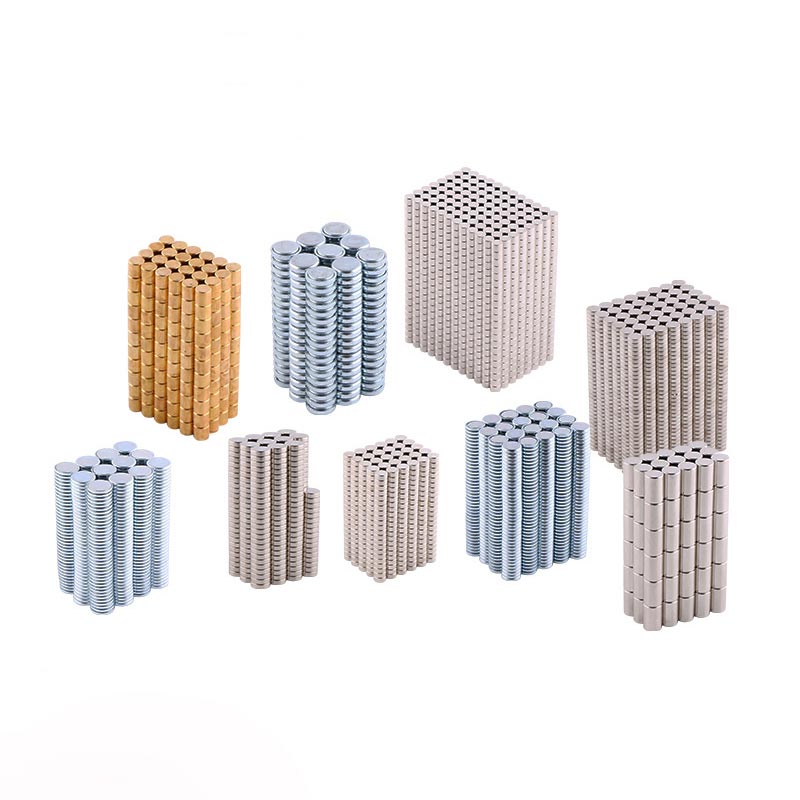
The Science of Magnetism Loss in Disk Magnets
All permanent disk magnets rely on aligned magnetic domains to generate a persistent external field. Over time, three primary factors disrupt this alignment:
| Factor | Effect on Magnetism | Typical Loss Rate |
|---|---|---|
| Thermal agitation | Gradual domain disorientation at elevated temperatures | 1–5% per decade (if below max operating temp) |
| External demagnetizing fields | Reversal of domains from opposing fields | Up to 100% (if field exceeds coercivity) |
| Physical shock/vibration | Mechanical disruption of domain alignment | Negligible to 2% (depending on intensity) |
| Corrosion/oxidation | Material degradation leading to structural flux loss | 0.5–3% annually (uncoated) |
The most critical threshold is the maximum operating temperature (e.g., 80°C for N-grade neodymium). Exceeding this even briefly can cause irreversible losses of 5–20% per cycle.
How to Prevent Demagnetization: 5 Proactive Strategies
Prevention is far more cost-effective than replacement. Implement these measures to extend the life of your disk magnets:
-
Thermal Management – Always derate the operating temperature by 15–20% below the rated maximum. Use heat sinks or ceramic spacers if mounted near motors or power electronics.
-
Shield from Opposing Fields – Store disk magnets in keeper bars or steel yokes when not in use. In assemblies, orient opposing poles to cancel stray fields rather than battle them.
-
Physical Isolation – Use rubber grommets or epoxy potting to absorb vibrations. Avoid hammering or drop-testing, especially for brittle neodymium grades.
-
Corrosion Protection – Select disk magnets with triple-layer coatings (Ni-Cu-Ni) from suppliers like Zhaobao, or apply conformal parylene for harsh chemical environments.
-
Proper Magnetization Direction – Always magnetize through the thickness (axial) for flat disk magnets to maximize resistance to demagnetizing fields from adjacent components.
Real-World Lifespan Expectations
| Environment | Unprotected | With Prevention |
|---|---|---|
| Room temperature, dry | <2% loss over 10 years | <0.5% loss over 10 years |
| 60°C continuous | 5–8% loss over 5 years | <2% loss over 5 years |
| Humid/salty (coastal) | 10–15% loss in 2 years | <3% loss in 2 years (coated) |
| High-vibration machinery | 3–6% loss in 1 year | <1% loss in 1 year (potted) |
Frequently Asked Questions About Disk Magnets
Q1: Can I fully remagnetize a disk magnet that has lost strength?
A: Yes, but only if the loss is below the irreversible threshold. Disk magnets that have suffered thermal or field-induced degradation can be re-magnetized using a capacitive discharge magnetizer. However, if the material has oxidized or cracked, remagnetization is futile. For Zhaobao neodymium grades, we recommend sending samples for a hysteresis test before attempting re-magnetization—success rates exceed 90% for magnets within 80% of original flux.
Q2: Does stacking multiple disk magnets increase or decrease the demagnetization risk?
A: Stacking disk magnets in attraction mode (north-to-south) actually reduces demagnetization risk because the internal field strengthens the domain alignment. However, stacking in repulsion mode (north-to-north) creates a strong opposing field that can partially demagnetize the weaker magnet in the pair. Always stack with adhesive spacers to maintain a small air gap—this prevents mechanical chipping and reduces stray opposing fields.
Q3: How often should I test my disk magnets for magnetic flux decay?
A: For critical industrial applications, test every 6 months using a Gauss meter at a fixed distance (e.g., 10 mm from the pole face). For general use, annual testing suffices. Keep a log of ambient temperature, humidity, and shock events. Zhaobao provides calibration charts with every batch, allowing you to compare measured flux against original BH-curve data—a deviation >8% warrants investigation.
When to Replace vs. Prevent
If your disk magnets show visible rust, chipped edges, or a flux drop exceeding 15% of initial rating, replacement is more economical than recovery. For new designs, always specify a 20% safety margin on pull force—this compensates for inevitable long-term creep.
Final Word: Partner with Experts
Magnetism is not magic—it is measurable, manageable, and maintainable. By applying thermal derating, physical protection, and regular monitoring, your disk magnets can outlast the equipment they serve. Zhaobao offers free demagnetization risk assessments for bulk orders, along with custom coatings and grades tailored to your operating profile.
Contact us today for a detailed lifetime projection report on your specific disk magnets—our engineering team will simulate 10-year performance under your actual conditions. Reach out via our website or email support to request samples and test data. Your magnetic reliability starts with a single conversation.