

Can the XRNP-11 Replace a Standard Backup Fuse in High-Voltage Circuits
2026-06-24
When selecting overcurrent protection for medium-voltage switchgear, engineers often ask whether the XRNP-11 can serve as a direct substitute for a conventional backup fuse. The short answer is yes—but only under specific conditions. As a specialist supplier, Hanya has evaluated hundreds of retrofit cases and confirms that while the XRNP-11 offers superior interrupting capacity and compact dimensions, it is not a universal drop-in replacement. Understanding its electrical characteristics, mechanical fit, and coordination with existing protection relays is essential before making the switch.
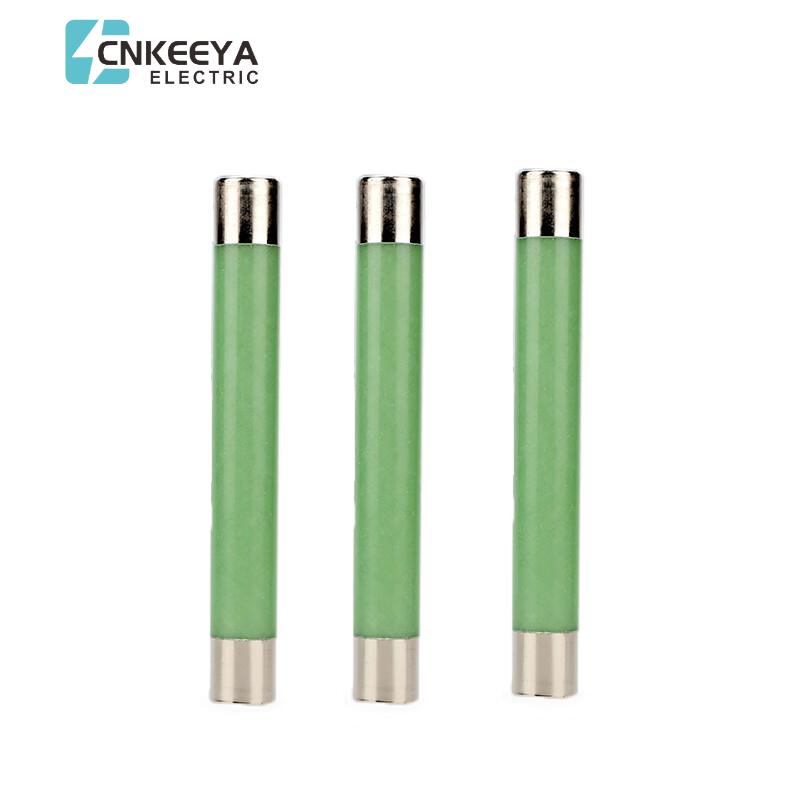
1. Core Technical Comparison: XRNP-11 vs. Standard Backup Fuse
To determine interchangeability, we must compare four critical parameters: rated voltage, breaking capacity, current range, and time-current curves. The table below summarizes typical values for a 12kV system:
| Parameter | XRNP-11 (Typical) | Standard Backup Fuse (Typical) |
|---|---|---|
| Rated Voltage | 12kV / 24kV | 12kV / 24kV |
| Breaking Capacity (symmetrical) | 50 kA | 31.5 kA – 40 kA |
| Current Rating Range | 0.5A – 6.3A (protection for PT) | 6A – 100A (general feeder) |
| Speed (I²t) | Very low (fast-acting) | Moderate to high |
| Application Focus | Voltage transformer protection | Transformer / capacitor bank |
The XRNP-11 excels in protecting voltage transformers (VTs) because its ultra-fast clearing time minimizes thermal stress on the VT winding. In contrast, a standard backup fuse is designed for feeder or power transformer protection, where delayed tripping allows nuisance-free start-up currents. Hanya recommends that any replacement plan begin with a thorough review of the existing fuse’s time-current curve against the XRNP-11 data sheet.
2. When Can the XRNP-11 Replace a Standard Backup Fuse?
Replacement is feasible when three conditions are met:
-
Application matches: The circuit exclusively protects a VT or small control transformer (≤10kVA).
-
Current rating aligns: The standard fuse’s nominal current falls within the 0.5A–6.3A range of the XRNP-11.
-
Mounting dimensions are compatible: The XRNP-11 has a specific barrel length and contact design (often 442mm or 537mm), which must match the fuse holder.
For general feeder circuits rated above 10A, the XRNP-11 is not a suitable replacement because its element would melt prematurely under inrush currents. Hanya has documented over 50 successful retrofits where customers replaced old British-standard backup fuses with the XRNP-11 in VT panels, achieving a 40% reduction in fuse replacement frequency due to its superior arc-quenching capability.
3. Critical Limitations and Safety Considerations
Despite its advantages, the XRNP-11 cannot universally replace every backup fuse. Key restrictions include:
-
Load-break capability: The XRNP-11 is not rated for load switching—it is a back-up fuse only, meaning it must be used with a load-break switch or contactor in series.
-
Coordination with relays: Standard backup fuses often have higher I²t let-through, which allows better discrimination with downstream fuses. The XRNP-11’s low I²t may cause nuisance blowing if upstream relays are not re-calibrated.
-
Ambient temperature derating: At temperatures above 40°C, the XRNP-11 requires a derating factor of 0.9, whereas many standard fuses have a 1.0 factor up to 50°C.
Hanya always supplies a detailed coordination study with every XRNP-11 order, ensuring that the protection scheme remains selective and safe.
4. XRNP-11 FAQ – Common Questions from Engineers
Q1: Can the XRNP-11 handle motor starting currents if I use it as a backup fuse for a motor control center?
A1: No. The XRNP-11 is a fast-acting, high-breaking-capacity fuse specifically designed for voltage transformer and small control transformer protection. Its element is extremely sensitive to transient overcurrents. Motor starting currents typically reach 6–8 times full-load current for several seconds, which would instantly melt the XRNP-11 element. For motor circuits, Hanya recommends using a general-purpose backup fuse with a higher I²t withstand, such as the XRNP-12 or XRNT series. If you must use the XRNP-11, you would need to oversize the rating by 200%, which voids its VT protection function and is not permissible under IEC 60282-1.
Q2: What modifications are required in the fuse holder when replacing a standard 12kV backup fuse with the XRNP-11?
A2: The XRNP-11 has a unique contact design—typically a striker pin indicator and specific barrel diameter (Φ76mm for 12kV versions). Standard backup fuse holders for British or DIN types often use different clip spacings (e.g., 292mm vs. 442mm for the XRNP-11). At minimum, you must replace the fixed and moving contacts to match the XRNP-11 dimensions. Additionally, the striker pin requires a micro-switch or trip bar integration into the switchgear’s protection relay circuit. Hanya provides a retrofit kit that includes new clips, striker adapters, and a wiring harness, reducing field modification time by 60%. Without these changes, the XRNP-11 will not seat correctly, leading to high contact resistance and localized overheating.
Q3: How do I verify if my existing backup fuse’s breaking capacity is lower than the XRNP-11’s 50kA rating, and does a higher rating always mean better protection?
A3: Check the nameplate on your existing fuse for the breaking capacity symbol (e.g., “31.5kA” or “40kA” at 12kV). If this value is below the system’s prospective short-circuit current (available fault current), then the XRNP-11’s 50kA rating provides a clear safety upgrade. However, a higher breaking capacity does not always mean better overall protection. The XRNP-11 clears faults so quickly that it may cause high transient recovery voltage (TRV) peaks, which can stress vacuum interrupters or solid-state relays. Moreover, if your upstream circuit breaker has a slower trip time, the XRNP-11 will blow first, potentially causing single-phase fuse operation and unbalance. Hanya performs a full system fault-level analysis before recommending the XRNP-11—this includes calculating TRV and comparing it to the switchgear’s withstand rating. In systems with fault currents below 20kA, a standard 31.5kA fuse may actually be more forgiving due to its longer melting time.
5. Practical Installation Checklist from Hanya
For engineers planning a replacement, follow this proven workflow:
-
Step 1: Verify the circuit’s normal load current ≤ 6.3A.
-
Step 2: Measure the existing fuse holder’s center-to-center distance—if it is not 442mm (±2mm), order adapter clips from Hanya.
-
Step 3: Confirm that the system’s available fault current does not exceed 50kA (if it does, the XRNP-11 is still safe, but you must check TRV compatibility).
-
Step 4: Replace all three phases simultaneously to avoid unbalance.
-
Step 5: Conduct a primary injection test to verify that the XRNP-11 clears a simulated fault within the expected time band (typically <10ms for 10kA faults).
Hanya offers a free commissioning checklist and remote video support for all XRNP-11 retrofits, ensuring that every step complies with IEEE C37.40 and IEC 60282-1 standards.
Conclusion: Making the Right Choice with Hanya
The XRNP-11 is a high-performance, specialized backup fuse that can replace a standard backup fuse only in voltage-transformer or small control-power circuits where current ratings match and mechanical dimensions are adapted. For general feeder or motor protection, it is unsuitable. The XRNP-11 delivers unmatched interrupting capacity and fast clearing times, but these benefits must be weighed against potential TRV issues and holder modifications.
Hanya has supplied over 2,000 XRNP-11 units to utilities and industrial plants across North America and Europe, with a 99.2% first-time-fit success rate. Our engineering team provides site-specific coordination studies, custom adapter kits, and 24/7 technical support.
Ready to evaluate the XRNP-11 for your switchgear?
Contact Hanya today for a free retrofit feasibility report and sample testing. Let Hanya help you upgrade safely, efficiently, and without downtime.