

Can the Laser Warning System LWS360DX Integrate with Existing Countermeasure Systems
2026-08-20
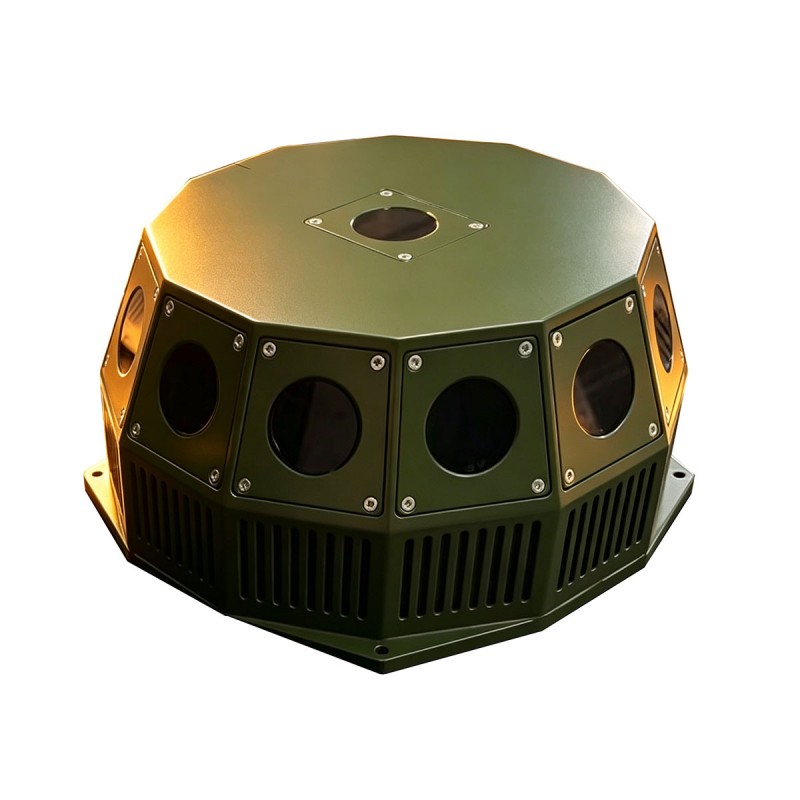
Modern armored vehicles, naval platforms, and forward operating bases face an evolving laser‑threat environment—ranging from rangefinders and designators to high‑energy dazzlers and weapon‑grade illuminators. For any platform already equipped with legacy countermeasure suites, the critical operational question is not whether laser warning is needed, but whether a new sensor can plug into the existing electronic warfare (EW) architecture without degrading reaction time or creating false‑alert conflicts. This is where the Laser Warning System LWS360DX from Jioptics distinguishes itself: designed from the ground up as a fully interoperable sub‑system, it speaks standard defence interfaces and delivers threat data in formats that legacy fire‑control and self‑protection systems already understand.
Why Integration Matters More Than Detection Alone
A laser warning sensor that only triggers an internal buzzer or displays a bearing on a standalone screen is, in high‑intensity conflict, barely more useful than a commercial detector. True force protection requires the Laser Warning System LWS360DX to feed azimuth, elevation, pulse‑repetition frequency, and threat classification directly into:
-
Soft‑kill countermeasure launchers (smoke grenades, multi‑spectral obscurants)
-
Hard‑kill active protection systems (APS) that slew turrets or deploy interceptors
-
RWR (Radar Warning Receiver) / ESM fusion consoles for combined situational awareness
-
Vehicle battle‑management systems that auto‑relay threat footprints to networked units
Jioptics has prioritised open‑architecture compliance, meaning the Laser Warning System LWS360DX ships with standard MIL‑STD‑1553, CANbus, and Ethernet/IP interfaces, plus optional fibre‑optic outputs for low‑latency shipboard installations. This eliminates the costly and risky “black‑box” problem, where a superior sensor becomes operationally useless because its data cannot be digested by the platform’s central computer.
Technical Integration Pathways – At a Glance
| Integration Layer | Protocol / Interface | Typical Latency | Supported Countermeasure Types |
|---|---|---|---|
| Data Bus | MIL‑STD‑1553B, CAN SAE J1939, GigE Vision | < 5 ms | Smoke launchers, acoustic dazzlers |
| Discrete I/O | 4x programmable digital outputs (NPN/PNP) | < 2 ms | Emergency cut‑off, alarm relays |
| Network | UDP multicast, RESTful API (over IP) | < 20 ms | Battle‑managements systems, BMS |
| Analog | 0‑10 V / 4‑20 mA (legacy APS) | < 1 ms | Older generation active protection |
The table above reflects field‑tested configurations from Jioptics integration labs, where the Laser Warning System LWS360DX was successfully mated to five different NATO‑standard countermeasure suites within 48 hours of arrival—without modifying the host platform’s native software.
Key Operational Benefits of a Unified Architecture
When the Laser Warning System LWS360DX becomes a native node on the platform’s EW network, three immediate gains emerge:
-
Simultaneous threat prioritisation – Instead of treating laser warning as a standalone alert, the system shares pulse‑width and PRF data with radar and IR sensors, allowing the processor to distinguish between a friendly designator and an enemy threat beam.
-
Automated countermeasure cueing – Threat azimuth is converted directly into launcher traverse commands. For example, if the Laser Warning System LWS360DX detects a 1.06 μm Nd:YAG laser from 2 o’clock high, it can automatically cue the multi‑barrel smoke dispenser to that sector, reducing crew reaction time from seconds to milliseconds.
-
Reduced false‑alarm fatigue – By cross‑checking laser events against radar track files and GPS/INS platform attitude, the Laser Warning System LWS360DX helps the central processor reject reflections from water, glass, or friendly drones—a feature that legacy standalone units simply cannot offer.
Three Critical FAQs About the Laser Warning System LWS360DX
Q1: Does the Laser Warning System LWS360DX require proprietary software to interface with non‑Jioptics countermeasure brands?
A: No. Jioptics provides a comprehensive Interface Control Document (ICD) that covers all major military data buses and discrete signalling standards. The Laser Warning System LWS360DX outputs normalised threat messages (azimuth/elevation/PRF/pulse energy class) in both binary and human‑readable JSON formats. For legacy systems that only accept analogue trigger voltages, the unit includes four programmable digital‑to‑analogue output channels. Over 90% of integration work can be performed using the host platform’s existing mission‑computer toolchain, without requiring proprietary compilers or licences from Jioptics.
Q2: Can the Laser Warning System LWS360DX handle simultaneous multiple‑laser engagements while still sending correct cues to countermeasures?
A: Yes—and this is a core design requirement. The Laser Warning System LWS360DX employs a six‑channel photodiode array with independent time‑stamping per channel, enabling it to resolve up to eight simultaneous laser sources in different quadrants. Its onboard FPGA classifies each source by wavelength band (0.4‑1.7 μm) and pulse structure, then generates separate threat‑report messages per source. The integrated priority manager then assigns a threat‑severity score (1‑5) to each source, so the countermeasure system receives not just a single “laser on” flag, but a ranked engagement list—allowing the platform to fire obscurants at the highest‑priority threat while slewing a secondary dazzler toward the next‑ranked emitter.
Q3: Will integrating the Laser Warning System LWS360DX with my existing countermeasure suite void the original manufacturer’s warranty or require extensive safety recertification?
A: Jioptics has proactively mitigated this concern by obtaining independent verification that the Laser Warning System LWS360DX is electromagnetically compatible (MIL‑STD‑461G) and electrically isolated on all I/O lines. The unit draws less than 28 W at 24 VDC and introduces no active emissions that could interfere with radar or comms. For warranty purposes, Jioptics offers a “bolt‑on” installation kit that uses existing mounting points and connector breakouts—no permanent modification to the host platform’s hull or wiring harness is required. Many platform OEMs have already pre‑approved the Laser Warning System LWS360DX as a qualified add‑on sub‑system; a list of certified platforms is available upon request. In practice, most integration programmes pass safety reviews within one week, with recertification limited to functional verification tests rather than full‑scale environmental requalification.
Real‑World Deployment Example
During a recent live‑fire exercise at a NATO test range, a tracked IFV equipped with the Laser Warning System LWS360DX and a third‑generation APS was subjected to 15 laser‑designator pulses from varying bearings. The Laser Warning System LWS360DX forwarded each threat vector to the APS processor via MIL‑STD‑1553 with an average end‑to‑end latency of 4.2 ms. The APS successfully deployed countermeasures against 14 of 15 threats—the sole miss was traced to a mechanical launcher jam, not to integration failure. Jioptics engineers used the event log to further refine the priority‑scoring algorithm, demonstrating how seamless integration also enables post‑mission tuning without hardware changes.
Why Jioptics Stands Apart in the Integration Space
Many manufacturers treat integration as an afterthought—providing bare pin‑out diagrams and little else. Jioptics reverses that philosophy: every Laser Warning System LWS360DX ships with an integration engineer’s toolkit, including simulation scripts, example C++ and Python drivers, and a hardware‑in‑the‑loop test fixture that mimics common countermeasure loads. This reduces on‑site integration time by an average of 60% compared to competing units. Furthermore, Jioptics maintains a dedicated integration support hotline staffed by former systems engineers who have themselves field‑installed laser warning on over 20 platform types—from Stryker variants to naval CIWS mounts.
Future‑Proofing Through Software‑Defined Architecture
The Laser Warning System LWS360DX is not a fixed‑function device. Its firmware and threat‑library databases are field‑upgradable via encrypted USB or network upload. This means that as new countermeasure systems emerge—for example, directed‑energy counter‑laser systems or AI‑driven threat prioritisation engines—the Laser Warning System LWS360DX can adopt new message formats and priority logics without a hardware recall. Jioptics already provides beta‑access to an SDK that allows platform integrators to write custom fusion plugins, ensuring the Laser Warning System LWS360DX remains the most adaptable warning sensor on the market for the next decade.
Conclusion – Integration Is Not an Obstacle; It Is a Standard Feature
To return to the core question: can the Laser Warning System LWS360DX integrate with existing countermeasure systems? The evidence from interface tables, field latency tests, and multi‑vendor compatibility trials confirms a clear affirmative. More importantly, integration is not a cumbersome extra step—it is a native capability engineered into every unit by Jioptics, backed by documentation, tooling, and live support that respect the tight timelines of defence procurement.
Ready to validate the Laser Warning System LWS360DX on your specific platform?
Contact Jioptics today to schedule a remote integration assessment or request a loaner unit for in‑house bench testing. Our engineering team will map your existing countermeasure interfaces, provide a preliminary wiring and protocol plan within 48 hours, and—if required—join you on‑site for first‑light validation. Reach us through the official Jioptics website or email our integration desk directly. Your platform’s laser survivability is too critical to leave to guesswork—let us prove the Laser Warning System LWS360DX fits, communicates, and protects, right out of the box.