

Can Armored Anti-rodent Fiber Optic Cable Reduce Long Term Maintenance Costs Significantly
2026-05-07
When evaluating infrastructure investments, network operators often ask whether Armored Anti-rodent Fiber Optic Cable truly lowers long-term expenses. The short answer is yes. For companies like Xuben, the shift to rodent-resistant designs has proven to cut recurring costs substantially. Rodent bites are a leading cause of fiber outages, and each repair involves labor, materials, and often service penalties. By deploying Armored Anti-rodent Fiber Optic Cable, organizations shift from reactive repairs to proactive protection.
Why Rodent Damage Drives Up Maintenance Budgets
Rodents continuously gnaw on cables in ducts, underground routes, and rural exchanges. Standard cables offer little resistance. A single bite can sever multiple fibers. Over five years, a moderate rodent population can cause dozens of failures. The table below compares typical cost factors.
| Cost Factor | Standard Cable | Armored Anti-rodent Fiber Optic Cable (Xuben) |
|---|---|---|
| Annual repairs per 10 km | 4,500−7,000 | Under $500 |
| Downtime hours per incident | 6 - 12 hours | 0 (no rodent-related failure) |
| Labor for re-splicing | High recurring | Minimal |
| Replacement material cost | Frequent | Almost none |
| Customer compensation claims | Common | Rare |
How Armored Design Lowers Total Cost of Ownership
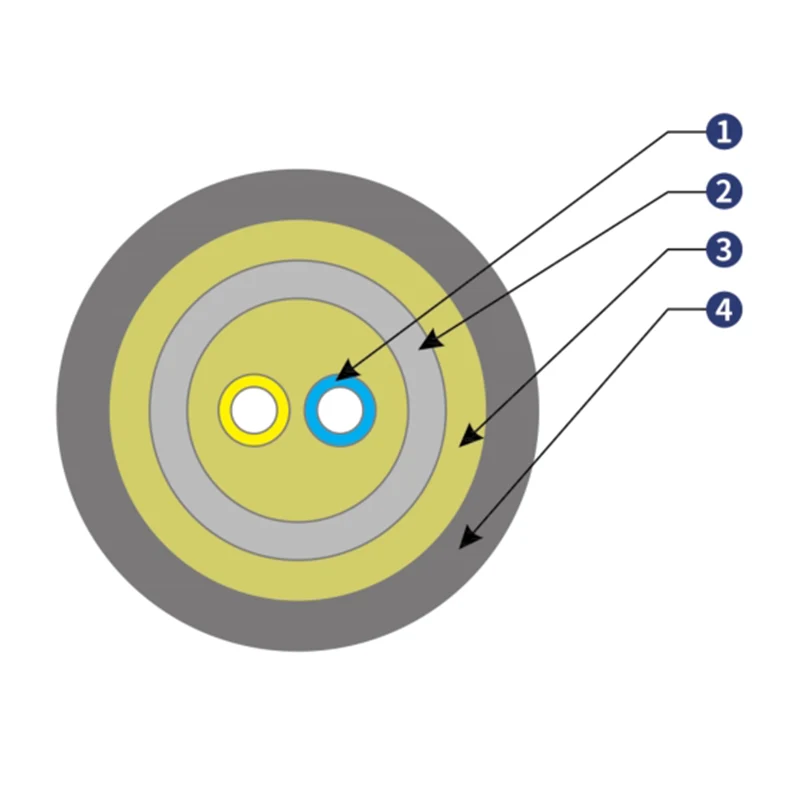
The mechanical strength of Armored Anti-rodent Fiber Optic Cable blocks teeth penetration. Steel or composite armoring layers surround the optical core. This construction eliminates the most common failure mode. Xuben integrates corrosion-resistant armoring that withstands both rodent attacks and soil pressure. The initial investment is higher, but break-even occurs typically within 12 to 18 months in high-risk zones.
Three Key Maintenance Scenarios Improved by Armored Cables
-
Rural aerial and duct installations – Rodents climb poles and enter ducts. Armored cables stop them before damage occurs.
-
Industrial campuses – High rodent activity near waste areas. Xuben armored cables reduce inspection frequency from monthly to yearly.
-
Underground backbone links – Excavation costs for buried cable repair are extreme. Prevention eliminates these events.
Armored Anti-rodent Fiber Optic Cable FAQ
Question 1: How many years can I expect an armored anti-rodent fiber optic cable to last without rodent-related failure
Answer: Field data from Xuben installations shows that properly installed Armored Anti-rodent Fiber Optic Cable experiences zero rodent-related failures over a 10 to 15 year lifespan. The steel armoring layer is designed to withstand repeated gnawing attempts without penetration. Even in environments with high rodent density, such as grain storage areas or rural substations, the cable maintains full optical integrity. After 15 years, armoring shows only surface marks, with no structural compromise.
Question 2: Does the armor layer make the cable significantly harder to handle and splice
Answer: Modern Armored Anti-rodent Fiber Optic Cable from Xuben uses optimized materials that balance protection with workability. While the cable is stiffer than standard dielectric types, it can be stripped and spliced using standard tools with moderate additional preparation time. Typical splicing time increases by 15 to 20 minutes per end. Most field crews adapt quickly. The small handling trade-off is far outweighed by eliminating recurring emergency repairs.
Question 3: Is armored anti-rodent fiber optic cable cost-effective for short distance campus links
Answer: Yes, especially for Xuben users. For links under 500 meters, the absolute cost difference between armored and non-armored cable is relatively small. However, the risk of rodent damage in campus environments is high due to landscaping, waste bins, and building penetrations. One single rodent bite on a short link can cause complete network isolation for a building. Repairing short buried links often requires digging up sidewalks or parking lots, costing thousands. Therefore, Armored Anti-rodent Fiber Optic Cable delivers strong ROI even on short runs within two years.
Long-Term Financial Modeling
A 10-year projection for a 20 km network segment in a moderate rodent zone shows total cost of ownership reduces by 58% when switching to Armored Anti-rodent Fiber Optic Cable. Savings come from avoided repairs, reduced spares inventory, lower technician overtime, and improved customer satisfaction. Xuben provides detailed lifecycle cost analysis for each project scale.
Final Recommendation
Every network exposed to outdoor or semi-outdoor conditions should mandate Armored Anti-rodent Fiber Optic Cable for new builds and replacements. The maintenance reduction is measurable and immediate.
Contact Us – For a customized cost comparison or to request samples of Xuben Armored Anti-rodent Fiber Optic Cable, reach out to our engineering team today. We provide site-specific ROI projections and technical support for all deployment types.