

Can a Faulty Solenoid Valve Stop a Fully Automatic Washing Machine from Filling with Water
2026-09-23
When a Fully Automatic Washing Machine suddenly stops filling with water, the Fully Automatic Washing Machine Solenoid Valve is one of the first components a technician should inspect. At Lihe, we manufacture and supply precision solenoid valves engineered for consistent water inlet control, and our field data shows that inlet valve failure ranks among the top three causes of no-fill complaints. Understanding how this small but critical part works—and how it fails—can save hours of diagnostic time and prevent unnecessary part replacements.
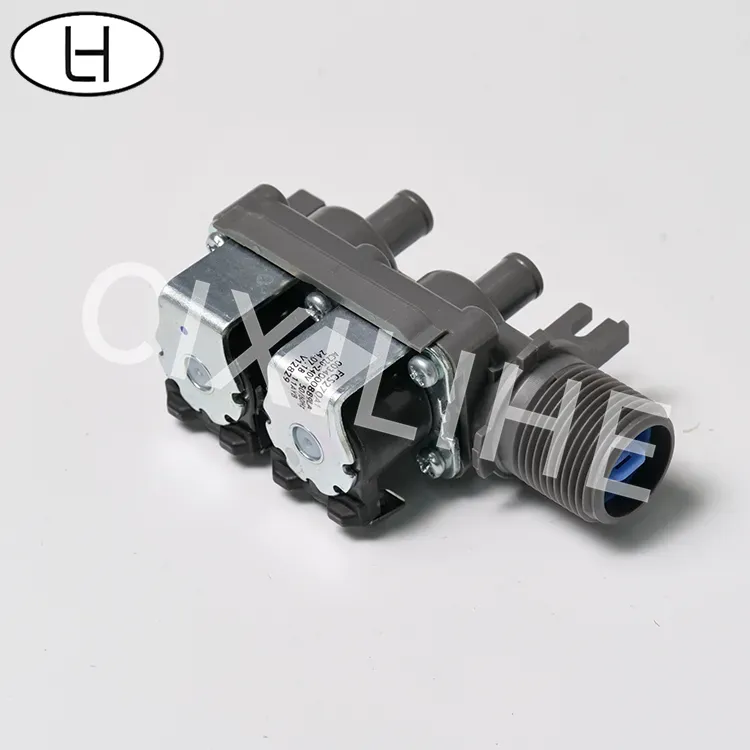
What the Solenoid Valve Does
The Fully Automatic Washing Machine Solenoid Valve is an electromechanical device that opens or closes the water inlet passage on command from the control board. When the board sends voltage to the coil, the magnetic field pulls a plunger, allowing water to flow into the tub. When power is cut, a spring returns the plunger and seals the inlet.
How a Faulty Valve Blocks Water Fill
A Fully Automatic Washing Machine Solenoid Valve can stop water fill in several distinct ways:
-
Coil burnout – the electromagnetic coil opens or shorts, so the plunger never actuates.
-
Diaphragm rupture – the rubber membrane tears, causing internal leakage or complete loss of sealing.
-
Mineral scale buildup – calcium deposits jam the plunger, preventing movement even with correct voltage.
-
Debris obstruction – rust, sand, or sediment blocks the inlet screen or valve seat.
-
Electrical disconnection – corroded terminals or broken wiring interrupt the signal from the control board.
Diagnostic Reference Table
| Symptom | Probable Cause | Verification Method | Lihe Recommendation |
|---|---|---|---|
| No water enters, no sound | Coil open circuit | Measure coil resistance with multimeter | Replace Fully Automatic Washing Machine Solenoid Valve |
| No water, faint hum | Plunger jammed | Inspect for scale, test manual override | Clean or replace valve |
| Water drips continuously | Diaphragm debris | Visual inspection of seal | Install new valve assembly |
| Intermittent fill | Loose terminal | Wiggle test, voltage check | Re-seat or replace connector |
| Low flow rate | Clogged inlet screen | Remove and inspect screen | Clean screen, flush line |
Step-by-Step Verification
-
Disconnect power and shut off the water supply.
-
Access the valve, typically at the rear of the machine.
-
Set a multimeter to resistance mode and measure across the coil terminals. A good Fully Automatic Washing Machine Solenoid Valve coil usually reads between 3 kΩ and 5 kΩ, though specifications vary by model.
-
Apply rated voltage briefly and listen for a click.
-
Inspect the inlet screen and diaphragm for debris or damage.
If the coil reads infinite resistance or the plunger does not move, replacement is the reliable solution. Lihe valves are tested for coil stability, diaphragm durability, and cycle life to ensure consistent fill performance.
Frequently Asked Questions
Q: Can a faulty Fully Automatic Washing Machine Solenoid Valve stop the machine from filling with water completely?
A: Yes. If the coil fails or the plunger cannot move, the valve remains closed and no water enters the tub, resulting in a complete no-fill condition.
Q: How do I know if the Fully Automatic Washing Machine Solenoid Valve is bad or if the control board is faulty?
A: Measure voltage at the valve terminals during the fill cycle. If voltage is present but the valve does not open, the valve is faulty. If no voltage arrives, the control board or wiring is the likely cause.
Q: Is it better to repair or replace a Fully Automatic Washing Machine Solenoid Valve?
A: Replacement is the professional standard. Cleaning may temporarily restore function, but a new valve from a reputable supplier such as Lihe restores reliable sealing, correct flow rate, and long-term durability.
Contact Us
For OEM and aftermarket Fully Automatic Washing Machine Solenoid Valve solutions, contact Lihe today. Our engineering team provides specification matching, sample testing, and bulk supply support to keep your production line and service network running without interruption.