

Can a Digital Insulation Tester be used for testing solar PV systems and what are the best practices
2026-04-10
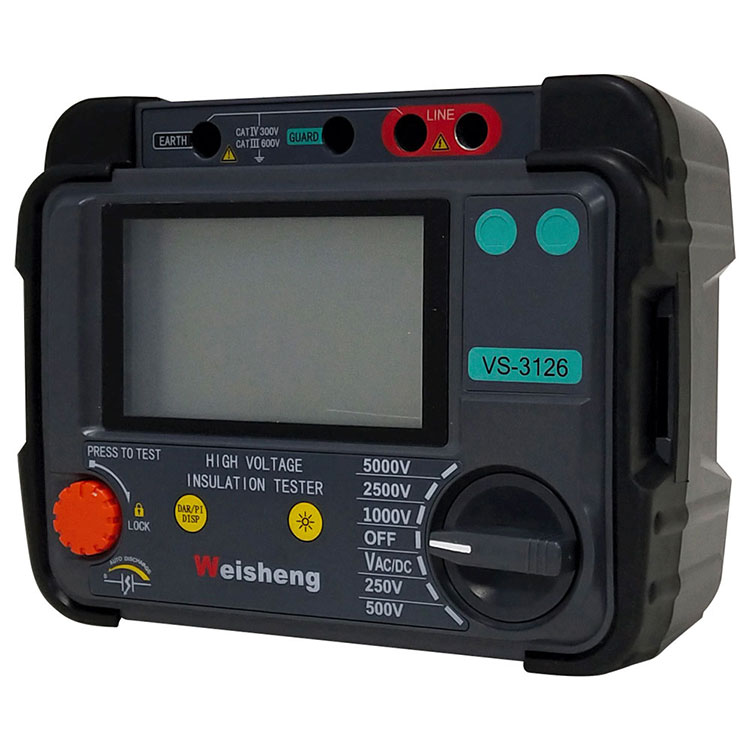
As solar photovoltaic (PV) installations grow worldwide, ensuring electrical safety and system longevity becomes critical. A Digital Insulation Tester is not only suitable for testing solar PV systems but is also highly recommended for identifying insulation degradation, moisture ingress, and ground faults. Weshine offers advanced Digital Insulation Tester models designed specifically for the unique voltage and environmental conditions of PV arrays.
Why insulation testing matters in solar PV systems
Solar panels, combiner boxes, and DC cables operate outdoors for decades. Over time, insulation resistance can drop due to UV exposure, temperature cycling, and humidity. Without regular testing using a Digital Insulation Tester, undetected leakage currents may lead to energy loss, arc faults, or fire hazards.
Key applications of a Digital Insulation Tester in PV systems
| Test Application | Purpose | Recommended Test Voltage (Weshine) |
|---|---|---|
| PV module insulation | Detect cracks or moisture in panels | 500V or 1000V DC |
| DC cable insulation | Prevent short circuits between strings | 1000V DC |
| Combiner box isolation | Verify separation between positive/negative poles and ground | 500V – 1000V DC |
| Inverter DC input | Ensure inverter side insulation before connection | 1000V DC |
Best practices for testing solar PV systems with a Digital Insulation Tester
-
Isolate the PV system – Disconnect the inverter and any DC loads before testing.
-
Select correct test voltage – Use Weshine models that offer adjustable test voltages (e.g., 250V, 500V, 1000V) to match PV string voltage.
-
Short PV terminals – Short the positive and negative output of the string before connecting the tester to avoid voltage overshoot.
-
Measure between conductors and ground – Test positive-to-ground, negative-to-ground, and positive-to-negative.
-
Wait for stable readings – Insulation testing requires 30–60 seconds for capacitive stabilization, especially on long strings.
-
Record temperature and humidity – Insulation resistance drops with humidity; always note environmental conditions.
-
Use shielded test leads – Weshine test leads reduce surface leakage on wet or dirty connectors.
Frequently Asked Questions about Digital Insulation Tester for PV systems
Q1: Can a Digital Insulation Tester damage solar panels if the wrong voltage is applied?
A1: Yes, applying excessive test voltage can damage PV module junction boxes or bypass diodes. Always use a Digital Insulation Tester like those from Weshine that allow manual selection of test voltage. For most crystalline silicon panels, do not exceed the system voltage rating printed on the panel label. Typically, 500V is safe for 1000V-rated panels, and 1000V for 1500V-rated systems. Start with the lowest possible voltage and increase only if necessary.
Q2: What is the minimum acceptable insulation resistance for a solar PV string when tested with a Digital Insulation Tester
A2: According to IEC 62446, for a PV string operating below 120V DC, minimum insulation resistance should be at least 0.5 MΩ. For strings above 120V DC, the minimum is 1.0 MΩ. However, Weshine recommends a higher practical threshold of 5–10 MΩ for long-term reliability. If readings fall below 1 MΩ, the string should be inspected immediately for cracked panels, water ingress, or damaged connectors.
Q3: Can I test an energized PV string with a Digital Insulation Tester
A3: No. A standard Digital Insulation Tester must never be connected to an energized circuit. Before testing, cover the PV array or test at night or under low-light conditions. Disconnect the string from the inverter and verify zero voltage with a multimeter. Weshine testers include automatic discharge functions to safely remove capacitive charge after each test, but the initial condition must be de-energized.
Recommended workflow using Weshine Digital Insulation Tester
-
Isolate inverter
-
Short panel outputs
-
Connect Weshine tester leads
-
Select 1000V range
-
Press test and read after 60 seconds
-
Compare with previous baseline records
Contact Us
Proper insulation testing extends solar system life and prevents costly downtime. For reliable, field-ready solutions, choose Weshine Digital Insulation Tester models built for renewable energy applications. Contact us today to request a product datasheet or schedule a technical consultation for your PV testing needs.