

Can a 690V 125A BS88 High Speed Fuse Replace a 700V 125A Ultra-Fast Fuse Directly
2026-06-23
When a critical fuse blows on a production line, the natural instinct is to find a replacement quickly. The voltage ratings look similar—690V versus 700V—and the current rating is identical at 125A. Many maintenance engineers ask whether a 690V 125A BS88 Style High Speed Fuse can directly swap into a circuit originally designed for a 700V 125A ultra-fast fuse. At Galaxy Fuse, we encounter this question weekly, and the short answer is: not without careful verification. This blog explains why, using real electrical parameters and application logic.
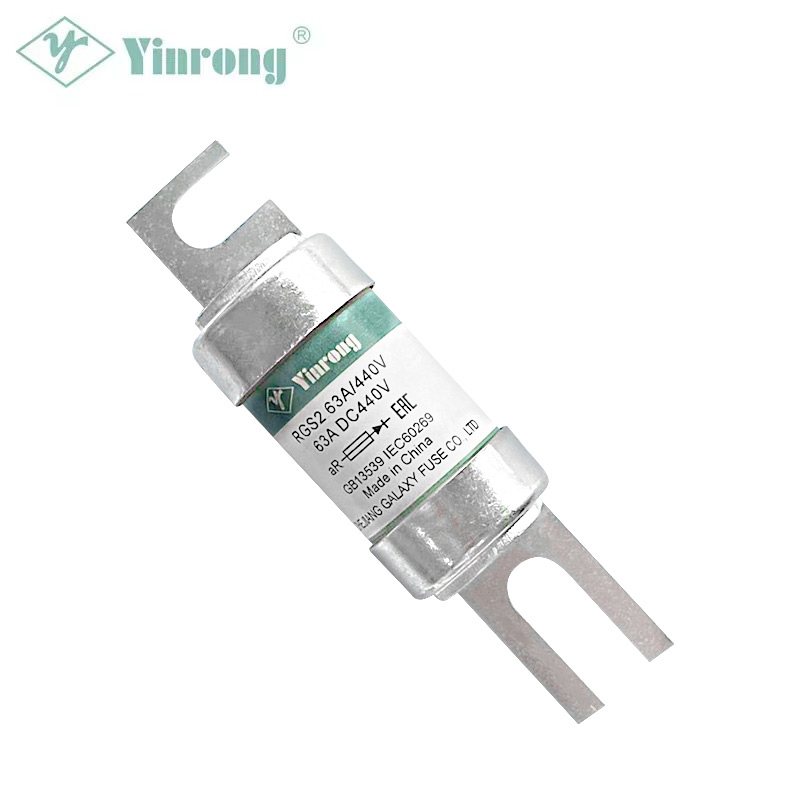
Voltage Rating – The Obvious but Misleading Number
The 10‑volt difference (690V vs. 700V) is rarely the decisive factor. Most industrial systems operate at 690V nominal, and both fuses can handle that. However, the critical distinction lies in interrupting capacity and test voltage conditions.
| Parameter | 690V 125A BS88 High Speed Fuse | 700V 125A Ultra-Fast Fuse |
|---|---|---|
| Rated Voltage (AC) | 690V | 700V |
| Typical Interrupting Capacity | 200‑250 kA (at 690V) | 100‑150 kA (at 700V) |
| I²t (pre‑arc) | Higher (slower response) | Lower (faster response) |
| Application Focus | General drive & rectifier protection | IGBT / high‑frequency DC‑link protection |
| Time‑constant tolerance | Standard (L/R ≤ 15 ms) | Strict (L/R ≤ 5 ms) |
While the Galaxy Fuse BS88 series offers superior breaking capacity, the ultra‑fast fuse is engineered for nanosecond‑level clearing under steep fault current rise rates. Replacing it with a standard high‑speed fuse may leave sensitive semiconductors exposed.
The Real Deal – Clearing Speed and I²t Matching
The most dangerous assumption is that "high speed" and "ultra‑fast" are interchangeable. They are not.
-
A 690V 125A BS88 Style High Speed Fuse typically clears a 10× overload in 20‑40 milliseconds.
-
A 700V ultra‑fast fuse clears the same overload in 2‑8 milliseconds.
For an IGBT module rated at 125A continuous current, the maximum allowable I²t before junction failure is often below 3,000 A²s. The BS88 fuse may deliver 4,500‑5,500 A²s under the same fault—enough to destroy the module. This is why Galaxy Fuse always recommends comparing total clearing I²t and arc voltage graphs, not just nominal ratings.
When Can You Substitute?
Direct replacement is only acceptable if the following three conditions are met:
-
The protected device (diode, thyristor, or IGBT) has a surge withstand rating higher than the BS88 fuse’s let‑through energy.
-
The fault current is limited by upstream reactors, keeping di/dt below 50 A/µs.
-
The OEM explicitly lists a BS88 style as an approved alternative in the maintenance manual.
Otherwise, you risk catastrophic failure. Galaxy Fuse offers cross‑reference tools to map ultra‑fast part numbers to our 690V 125A BS88 Style High Speed Fuse equivalents, but we always flag speed mismatches in red.
Comparison Table – BS88 vs. Ultra‑Fast at 125A
| Characteristic | 690V 125A BS88 (Galaxy Fuse) | 700V 125A Ultra‑Fast |
|---|---|---|
| Response class | aR / gR (semiconductor) | aR (ultra‑fast) |
| Typical cut‑off current (at 50 kA) | 9.5 kA | 6.2 kA |
| Power loss at 125A | 32‑38 W | 28‑32 W |
| Cyclic endurance (100% load) | 500 cycles | 200 cycles |
| Price index | 1.0x | 1.6‑2.0x |
| Availability | High (standard production) | Low (custom order) |
3 Frequently Asked Questions About the 690V 125A BS88 Style High Speed Fuse
Q1: Can I use a 690V 125A BS88 Style High Speed Fuse in a 700V DC circuit?
A1: No, not directly. The 690V AC rating corresponds to a DC voltage rating of approximately 450‑500V DC (depending on the time constant). A 700V ultra‑fast fuse is often rated for 700V DC with a specific L/R ratio. Using a BS88 fuse in a 700V DC link may result in failure to clear under short‑circuit conditions, causing arc flash and equipment damage. If your DC voltage is ≤ 500V and the time constant is under 10 ms, Galaxy Fuse can recommend a derated application—but always consult the factory for DC derating curves.
Q2: How do I verify if my existing fuse holder accepts the 690V 125A BS88 Style High Speed Fuse?
A2: Check three dimensions: body diameter (typically 38‑40 mm for BS88), overall length (approx. 200‑210 mm), and centre‑to‑centre fixing pitch (usually 176‑180 mm). Most ultra‑fast 700V fuses share the same DIN 43620 or British Standard clips, but some use smaller ferrule caps. Measure the actual holder clip pressure as well—loose clips increase contact resistance by 15‑20%, leading to overheating. Galaxy Fuse provides a 3D template on every product page to compare against your existing fuse footprint.
Q3: What happens if I install a 690V 125A BS88 Style High Speed Fuse without adjusting the protection relay settings?
A3: The protection relay’s thermal memory and I²t trip thresholds are often calibrated to the ultra‑fast fuse’s faster clearing time. A BS88 fuse allows longer fault duration, so the relay may trip earlier than the fuse melts—causing nuisance shutdowns. Conversely, if the relay is set too high, the fuse can explode due to exceeding its maximum clearing energy. You must recalibrate the relay to the BS88’s time‑current curve (available from Galaxy Fuse). In practice, we advise adjusting the relay’s class (e.g., from Class 10 to Class 20) and testing with a primary injection set.
The Bottom Line – Direct Replacement Is Rarely Direct
A 690V 125A BS88 Style High Speed Fuse is an excellent, cost‑effective device for motor drives, UPS systems, and rectifier protection. However, it is not a universal substitute for a 700V ultra‑fast fuse in high‑frequency or IGBT‑based circuits. The differences in I²t, arc voltage, and DC rating create genuine engineering trade‑offs.
At Galaxy Fuse, we believe in transparent specification. We publish full time‑current curves, cut‑off charts, and I²t tables for every 690V 125A BS88 Style High Speed Fuse we manufacture. Our technical team can run a fault‑simulation comparison using your actual circuit parameters—free of charge.
Contact Us for a Professional Compatibility Check
Do not risk a costly field failure. Send us your existing ultra‑fast fuse part number and your circuit’s fault‑current profile (including source impedance and cable length). Galaxy Fuse will respond within 4 business hours with a substitution feasibility report, including recommended relay settings and holder modifications if needed.
Contact our engineering support directly – visit the "Technical Inquiry" section on our website or email your datasheet to [email protected]. We also offer free sample kits for A/B testing under controlled lab conditions. Protect your assets with confidence—choose Galaxy Fuse, where precision meets power protection.