

Are Electronic Capacitors the Hidden Key to Stable and Efficient Circuit Design?
2026-02-27
When I began sourcing components for long-life circuit assemblies, I quickly realized that the reliability of a product often depends on details many people overlook. Over the years, I have seen how Shenzhen Greeting Electronics Co., Ltd. gradually expanded its component portfolio to include high-performance Electronic Capacitors that directly address real engineering challenges. Rather than treating capacitors as generic parts, I now evaluate Electronic Capacitors as strategic components that influence stability, noise control, power integrity, and overall system lifespan.
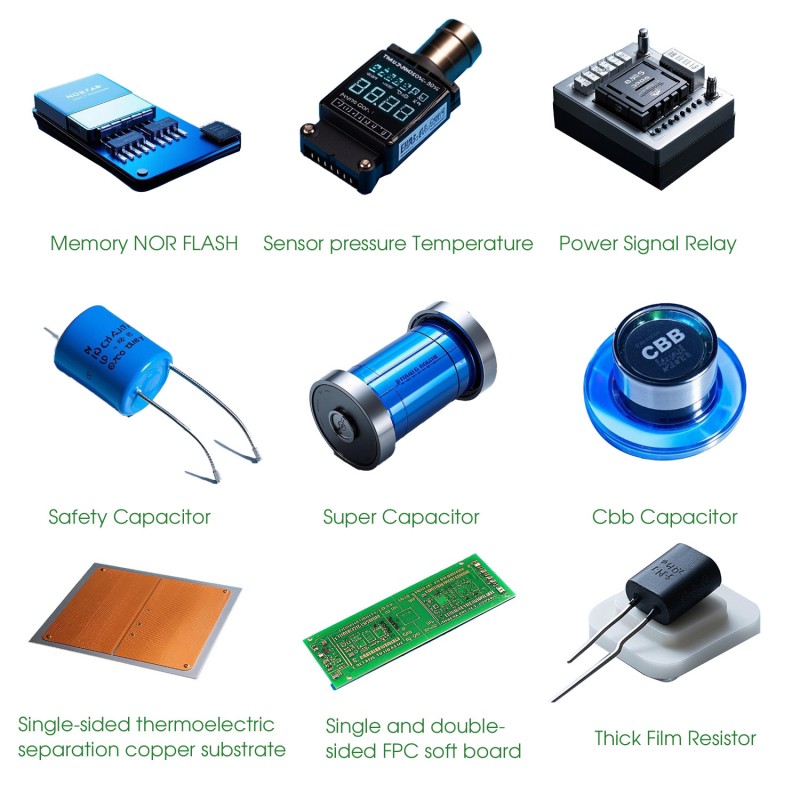
Why Do Electronic Capacitors Matter More Than Most Designers Expect?
I often meet engineers who focus heavily on ICs and processors while underestimating the role of Electronic Capacitors. However, in practical applications, these components perform essential functions that determine whether a circuit runs smoothly or fails prematurely.
- I rely on Electronic Capacitors to smooth voltage fluctuations and maintain steady DC output.
- I use them for decoupling to suppress noise and protect sensitive components.
- I depend on them for energy storage in power supplies and backup systems.
- I select specialized types for timing, filtering, and signal coupling tasks.
When capacitors are poorly selected, I often see overheating, unstable outputs, or unexpected shutdowns. That is why I approach capacitor selection as a design-critical decision rather than a cost-driven afterthought.
What Pain Points Do Buyers Face When Sourcing Electronic Capacitors?
In my experience, buyers and engineers encounter several recurring issues when sourcing Electronic Capacitors:
- Unclear lifespan ratings under real operating temperatures
- Inconsistent capacitance tolerance across batches
- Limited voltage margins leading to early failure
- Supply instability for large-scale production
- Compatibility challenges with high-frequency applications
I have learned that addressing these concerns requires not only technical data but also reliable manufacturing processes and strict quality control standards. Consistency is just as important as performance specifications.
How Do Different Types of Electronic Capacitors Serve Specific Applications?
I choose different Electronic Capacitors depending on the circuit requirements. Each type has unique electrical characteristics, advantages, and ideal use cases.
| Capacitor Type | Main Advantages | Typical Applications |
| Aluminum Electrolytic | High capacitance, cost-effective for bulk energy storage | Power supplies, industrial equipment |
| Ceramic | Low ESR, excellent high-frequency performance | Decoupling, RF circuits, consumer electronics |
| Film | Stable capacitance, low loss, long service life | Audio systems, precision electronics |
| Tantalum | Compact size, reliable performance in limited space | Portable devices, automotive electronics |
By aligning the capacitor type with the electrical and environmental demands of the project, I reduce failure risks and extend product lifespan significantly.
What Technical Factors Should I Evaluate Before Choosing Electronic Capacitors?
I never select Electronic Capacitors based solely on capacitance value. Instead, I examine several technical parameters that directly impact circuit reliability:
- Rated voltage with adequate safety margin
- Equivalent Series Resistance for thermal control
- Operating temperature range and endurance hours
- Ripple current capability in power applications
- Physical dimensions and PCB compatibility
In high-frequency or switching environments, I pay special attention to ESR and impedance characteristics. In long-life industrial systems, I prioritize endurance testing data and thermal stability. Matching these parameters to real working conditions is critical for sustainable performance.
How Can High-Quality Electronic Capacitors Improve Product Longevity and Efficiency?
From my perspective, the right Electronic Capacitors directly enhance system durability and energy efficiency. Stable filtering reduces stress on voltage regulators, while low ESR components minimize heat generation. Over time, this translates into fewer maintenance cycles and improved total cost of ownership.
In industrial automation, renewable energy systems, and automotive electronics, I have seen how carefully selected capacitors reduce downtime and protect high-value components. This is especially important in applications where system failure leads to operational loss.
Why Does Supply Chain Reliability Matter When Ordering Electronic Capacitors?
Consistent supply is essential for scalable manufacturing. I prefer working with manufacturers who maintain strict quality inspection protocols and stable production capacity. Reliable sourcing of Electronic Capacitors ensures that large-volume orders meet both technical specifications and delivery timelines.
Strong technical support also makes a difference. When design adjustments are required, responsive engineering communication helps avoid production delays. For me, long-term cooperation is built on transparency, traceability, and performance consistency.
Are You Ready to Upgrade Your Circuit Performance with the Right Electronic Capacitors?
If you are facing instability, overheating, or inconsistent product performance, it may be time to reassess your component strategy. High-performance Electronic Capacitors can significantly improve reliability, filtering efficiency, and long-term stability across a wide range of applications.
I encourage you to evaluate your current capacitor specifications and consider working with an experienced manufacturer that understands real engineering challenges. If you would like detailed technical information, customized recommendations, or bulk pricing support, please contact us today. Our team is ready to discuss your requirements and help you select the most suitable Electronic Capacitors for your next project.