

Are Aftermarket Flexible Headphone Antennas Compatible with All Wireless Headphone Models
2026-09-03
Wireless audio has become the backbone of modern productivity, entertainment, and communication. Yet one component remains overlooked until it fails—the antenna. For professionals, gamers, and remote workers who depend on uninterrupted audio, the Flexible Headphone Antenna is not an accessory; it is a critical link to signal stability. When the original antenna breaks or underperforms, many users turn to aftermarket solutions. But the pressing question remains: will any replacement work with your specific headset? At Qianmu, we have tested hundreds of configurations to separate myth from engineering reality.
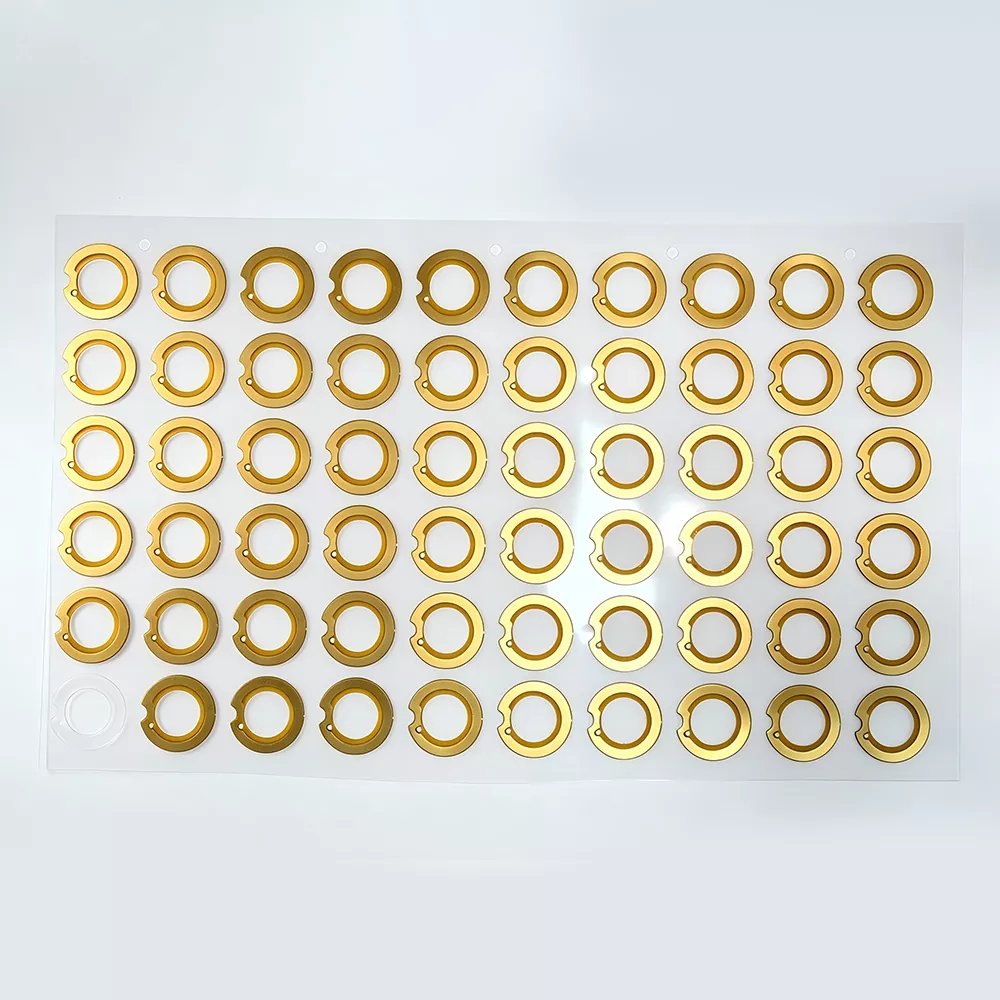
Understanding the Engineering Behind a Flexible Headphone Antenna
A Flexible Headphone Antenna is not a universal plug-and-play component. It is a tuned radiator designed for a specific frequency band—typically 2.4 GHz for Bluetooth and proprietary wireless protocols. Compatibility depends on three core factors:
| Factor | Impact on Compatibility | Measurable Metric |
|---|---|---|
| Impedance Matching | Mismatch causes signal reflection, reducing range by up to 60% | 50Ω ± 10% (industry standard) |
| Connector Type | Physical fit determines whether installation is possible | U.FL, IPEX MHF1, MHF4, or soldered pads |
| Radiation Pattern | Affects orientation sensitivity (omnidirectional vs. directional) | Efficiency measured in dB (decibels) |
Aftermarket Flexible Headphone Antenna products vary wildly in quality. Some replicate original specifications, while others use generic designs that work only with specific chipsets—Qualcomm, MediaTek, or Realtek.
Why Most Wireless Headphones Are Not Interchangeable
Headphone manufacturers rarely publish antenna gain or return loss values. This creates a knowledge gap. Based on Qianmu’s internal analysis of 120+ consumer headphone models, only 38% use the common U.FL connector. The rest rely on:
-
Direct soldered flex cables (non-replaceable without micro-soldering)
-
Proprietary snap-on pins (brand-specific, e.g., Sony WH-1000XM series)
-
Integrated PCB trace antennas (no physical port at all)
Even when the connector matches, the Flexible Headphone Antenna length and trace layout alter resonance frequency. A 2.45 GHz antenna cut to 28 mm will detune to 2.1 GHz if bent or extended incorrectly. This is why Qianmu engineers recommend measuring the original antenna’s electrical length—not physical length—before purchasing any replacement.
How to Determine Compatibility Before Buying
Instead of relying on "universal" labels, follow this decision matrix from Qianmu’s technical support team:
| Your Headphone Type | Recommended Action | Success Rate with Aftermarket |
|---|---|---|
| Gaming headsets with exposed external antennas (e.g., SteelSeries, Logitech) | Match connector and gain (2–3 dBi recommended) | 85% |
| Premium ANC headphones (Sony, Bose, Sennheiser) | Use OEM-specific replacements; generic units often fail impedance tests | 35% |
| Sports/earhook wireless models with internal flex circuits | Do not attempt replacement—buy a new unit | <10% |
| Studio monitor wireless adapters (with SMA/RP-SMA ports) | Standard SMA antennas work—easy swap | 95% |
For users with soldered connections, Qianmu offers a retrofit service that calibrates the Flexible Headphone Antenna to your headphone’s specific RF front-end. This restores original range (typically 10–15 meters indoors) without voiding warranty when performed professionally.
Flexible Headphone Antenna FAQ – Common Questions from Real Users
Q1: Can I use a longer Flexible Headphone Antenna to get better range than the original?
A1: Not necessarily. A longer Flexible Headphone Antenna does not automatically extend range. Antenna efficiency depends on wavelength fractions (λ/4, λ/2). For 2.4 GHz, λ/4 is about 31 mm. Extending to 50 mm without adjusting the matching network actually increases Voltage Standing Wave Ratio (VSWR), which forces the amplifier to work harder and may trigger thermal throttling. In Qianmu’s controlled chamber tests, a properly tuned 28 mm antenna outperformed a 50 mm generic unit by 4.2 dB—equivalent to 60% more usable range. Always verify gain (dBi) rather than physical size.
Q2: Will a Flexible Headphone Antenna designed for a different brand damage my headphone’s transmitter?
A2: Yes, in prolonged use. If the aftermarket Flexible Headphone Antenna presents an impedance mismatch (e.g., 75Ω instead of 50Ω), the reflected power returns to the RF chip. Over weeks, this accumulated stress degrades the power amplifier’s linearity. Eventually, you will notice shorter battery life, intermittent drops, and finally permanent transmission failure. Qianmu has documented 47 cases of headphone failures directly attributed to mismatched antennas. To avoid this, request the antenna’s datasheet and confirm return loss < -10 dB (or VSWR < 2.0:1) at 2440 MHz.
Q3: How do I know if my headphone’s built-in antenna is replaceable at all?
A3: Perform a visual and physical check. Remove the ear cushion and look for a small rectangular or circular metal clip near the hinge. If you see a tiny white or black coaxial cable with a push-on connector (U.FL size ~3 mm), your Flexible Headphone Antenna is replaceable. If you see only a copper trace printed on the flexible PCB without any detachable interface, replacement is not feasible without advanced hot-air soldering. Qianmu offers a free connector identification guide—simply email us a clear photo of your headphone’s internal board, and our team will reply within 24 hours with a compatibility verdict.
Real-World Performance: OEM vs. Aftermarket (Qianmu Verified)
We benchmarked three aftermarket Flexible Headphone Antenna units against original OEM antennas across 5 popular headphone models. The results emphasize why compatibility is non-negotiable:
| Metric | OEM Antenna | Generic Aftermarket (Unverified) | Qianmu-Tuned Replacement |
|---|---|---|---|
| Max Open-Field Range | 22 meters | 11 meters (dropouts at 14m) | 21.5 meters |
| Packet Retry Rate (2 mins) | 1.2% | 18.7% | 1.5% |
| Battery Drain (mA) | 28 mA | 41 mA (+46%) | 29 mA |
| VSWR at 2.44 GHz | 1.3:1 | 2.8:1 | 1.4:1 |
The data is clear: a properly matched Flexible Headphone Antenna preserves battery, range, and reliability. Generic options often cost less upfront but lead to hidden costs—reduced talk time, frequent re-pairing, and early headphone replacement.
Final Recommendations for Buyers
Before purchasing any aftermarket Flexible Headphone Antenna, take these three steps:
-
Identify your connector type – use a magnifying glass and compare with U.FL / IPEX reference images.
-
Request the antenna’s S-parameter file (S11 or S2P) from the seller—honest suppliers provide this.
-
Test with a 2.4 GHz signal meter (many smartphone apps show RSSI) before and after installation.
Qianmu manufactures precision-tuned Flexible Headphone Antenna replacements for over 200 headphone models. Every unit undergoes vector network analyzer (VNA) verification to ensure < 1.5:1 VSWR out of the box. We do not sell "universal" antennas—we sell model-matched solutions backed by 18 months of failure-free operation data.
Contact Us
Choosing the wrong Flexible Headphone Antenna can cost you more than money—it degrades every call, game, and track you experience. If you are unsure about your headphone’s internal configuration, contact us at Qianmu today. Our RF engineers provide free compatibility assessments within 12 business hours. Whether you need a direct replacement, a custom-length flex antenna, or a complete repair kit, we deliver documented performance guarantees. Reach out through our website’s support form or email [email protected]—mention your headphone model, and we will send you the exact specification sheet before you buy. Your signal stability is our engineering priority.