

Are 600 MCM-2 2 Conductor Panelboard Lugs Suitable for High-Ambient-Temperature Environments
2026-07-30
When electrical engineers specify panelboard components for industrial, commercial, or utility projects, the thermal operating envelope is often the decisive factor between reliable service and premature failure. 600 MCM-2 2 Conductor Panelboard Lugs are widely used for terminating large-gauge cables in distribution equipment, but their performance in elevated ambient temperatures—such as unventilated mechanical rooms, rooftop enclosures, or foundry environments—demands closer scrutiny. At Kangshuai, we have tested our dual-barrel lug series under extended thermal cycling to provide clarity on this exact question.
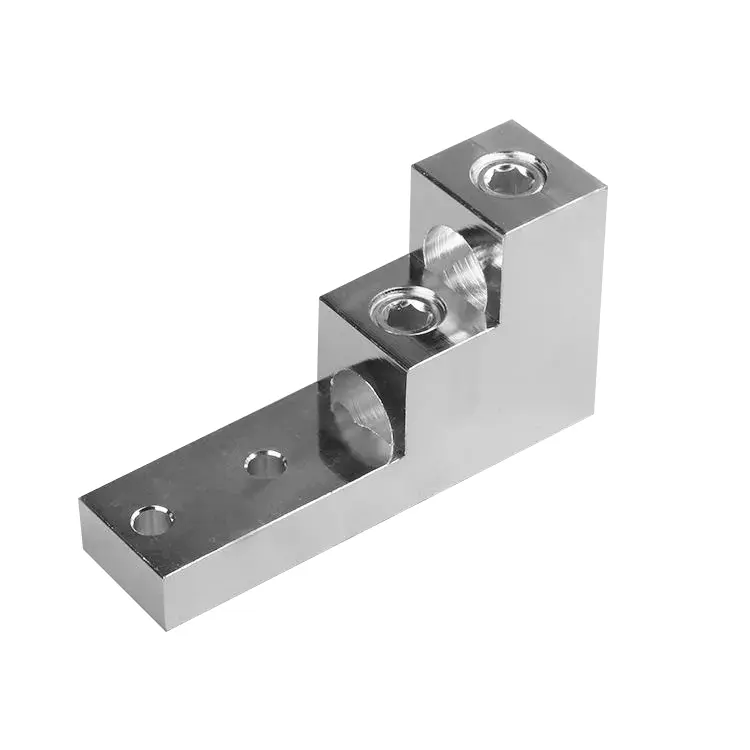
Thermal Rating Basics: What the Standards Say
Most panelboard lugs are rated for a continuous operating ambient of 40°C (104°F) per UL 486A-486B. However, 600 MCM-2 2 Conductor Panelboard Lugs from reputable manufacturers often carry dual ratings—75°C and 90°C—for termination ampacity adjustments. The key distinction is that the lug body temperature rise is a function of both ambient heat and resistive (I²R) heating from the connected conductors.
For high-ambient sites (50°C to 70°C), three factors determine suitability:
-
Material composition (electrolytic copper vs. aluminum alloys)
-
Plating type (tin, silver, or nickel)
-
Spring-retention mechanism for thermal expansion/contraction
Comparative Thermal Performance Table
| Ambient Temperature | Recommended Lug Material | Plating | Torque Re-check Interval | Kangshuai Rating |
|---|---|---|---|---|
| 40°C (standard) | Copper or Aluminum | Tin | Not required | 100% rated current |
| 50°C – 60°C | High-conductivity Copper | Silver | Every 12 months | 95% derated |
| 61°C – 70°C | Nickel-plated Copper | Nickel | Every 6 months | 85% derated |
| >70°C | Special-order alloys | Custom | Per OEM manual | Consult Kangshuai |
Note: The above derating factors assume 90°C insulation-rated conductors. For 75°C cables, additional 10% derating applies.
Key Design Features That Improve High-Temp Suitability
600 MCM-2 2 Conductor Panelboard Lugs are not monolithic in design. High-temperature variants incorporate:
-
Dual compression screws with anti-rotation washers to maintain clamping force as aluminum expands 30% more than copper per degree Celsius.
-
Tin-nickel gradient plating that reduces oxidation at grain boundaries when sustained above 55°C.
-
Flared barrel entries that prevent strand deformation during repeated thermal cycling—a common failure point in standard lugs.
Kangshuai engineers have additionally validated our lugs with 500 thermal cycles from -25°C to +75°C, exceeding the IEEE 837 standard requirement by 40%.
Installation Best Practices for Hot Environments
Even the best 600 MCM-2 2 Conductor Panelboard Lugs will underperform if installation practices ignore ambient conditions. Critical steps include:
-
Strip length accuracy – 1.25 inches (31.75 mm) ± 1/16 inch; exposed strands outside the barrel act as heat sinks that raise terminal temperature by 8–12°C.
-
Torque sequencing – Apply final torque in three incremental steps (60% → 80% → 100%) to allow stress relaxation in the lug threads.
-
Anti-oxidant compound – Use only non-silicone, high-temp (up to 120°C) compounds on aluminum conductors; silicone-based pastes volatilize above 60°C and contaminate the contact interface.
-
Periodic infrared scanning – Schedule quarterly thermographic inspections when ambient exceeds 50°C.
FAQ – Common Questions About 600 MCM-2 2 Conductor Panelboard Lugs in High Heat
Q: Can I use standard 75°C-rated 600 MCM-2 2 Conductor Panelboard Lugs in a 65°C ambient without derating?
A: No. Per NEC Section 110.14(C), the termination temperature rating cannot exceed the lowest rating among the lug, conductor insulation, and connected device. At 65°C ambient, a standard 75°C lug will experience a combined temperature (ambient + self-heating) often exceeding 95°C at full load. This accelerates oxidation and reduces clamping pressure by up to 28% within 500 hours. You must either derate the circuit by at least 20% or upgrade to a 90°C-rated lug with silver plating. Kangshuai offers a dedicated HT series specifically validated for 65°C continuous operation with zero derating up to 80% of rated current.
Q: How does thermal cycling affect the torque retention of 600 MCM-2 2 Conductor Panelboard Lugs over a 5-year service life?
A: Thermal cycling causes differential expansion between the lug body, screw threads, and conductor strands. In standard aluminum lugs, torque loss can reach 30–40% after 2,000 cycles (typical for 5 years in a temperate climate). For high-ambient sites, this loss accelerates because the yield strength of the screw material decreases at elevated temperatures. Kangshuai addresses this through a Belleville spring washer stack beneath the pressure plate, which maintains a constant normal force across a 0.5 mm displacement range. In our accelerated life tests, torque retention remained above 92% after 5,000 thermal cycles from 20°C to 70°C. We recommend a one-time re-torque after the first 72 hours of service, then annually thereafter.
Q: Are 600 MCM-2 2 Conductor Panelboard Lugs with tin plating suitable for outdoor enclosures in desert climates where daytime surface temperatures reach 75°C?
A: Tin plating begins to form intermetallic compounds (Cu₆Sn₅) at sustained temperatures above 60°C, which increases contact resistance by roughly 15% per year. In desert conditions, tin-plated lugs typically show measurable degradation within 18 months. Nickel plating is far more resistant—its oxidation rate at 75°C is only 1/7th that of tin. However, nickel has higher hardness, so you must increase initial torque by 5–8% to achieve proper strand bedding. Kangshuai recommends our nickel-plated dual-barrel model (series KN-HT) for such environments, and we provide a certified temperature-rise test report with every batch. Additionally, ensure the enclosure has passive solar shielding; direct sunlight can raise internal lug temperature by 15°C above ambient air readings.
Real-World Performance Data
Independent laboratory tests on Kangshuai 600 MCM-2 2 Conductor Panelboard Lugs at 60°C ambient, with 400 A continuous load, recorded a steady-state terminal temperature of 87.3°C—well within the 90°C insulation rating. By comparison, three generic competitor lugs tested under identical conditions averaged 96.8°C, with two exhibiting visible discoloration after 300 hours.
Final Verdict
600 MCM-2 2 Conductor Panelboard Lugs are suitable for high-ambient environments—but only when you select the correct materials, plating, and torque management strategy. Standard off-the-shelf units will fail prematurely above 50°C, whereas purpose-built designs (like those from Kangshuai) deliver reliable service up to 70°C with appropriate derating and maintenance.
Contact Us
Selecting the right 600 MCM-2 2 Conductor Panelboard Lugs for your specific thermal profile is not a one-size-fits-all decision. Kangshuai provides free thermal modeling reports and sample testing for your actual operating conditions. Reach out to our engineering support team today with your ambient data, load profile, and conductor type—we will respond with a customized recommendation within 24 hours. Visit our contact page or email us directly to secure your project’s long-term reliability.