

Through Hole Resistor Manufacturer: Key Factors for Quality Components
2026-07-19
When designing reliable electronics, through hole resistors remain a staple for their durability and ease of assembly. But not all resistors are created equal—choosing the right manufacturer can make or break your project. From material purity to production consistency, the details matter. That’s where a specialist like Milliohm enters the picture, redefining what engineers should expect from quality components. Let’s explore the often-overlooked factors that separate premium resistors from the rest.
Material Purity and Its Impact on Resistive Stability
The role of material purity in resistive stability is often overlooked, yet it can fundamentally determine how a component behaves under prolonged electrical stress. When we consider the atomic structure of conductors, even minute amounts of impurities can disrupt the regular lattice, introducing scattering centers that increase resistivity. This translates directly into higher energy dissipation as heat, which in turn can accelerate electromigration and grain boundary degradation. In precision applications, a shift in resistivity of just a few percent can throw off calibration, create hot spots, or cause early failure that is difficult to trace back to its source.
Manufacturers sometimes assume that standard-grade materials are sufficient because the specified purity level meets nominal conductivity requirements. However, hidden within that “meets spec” label are trace elements that become mobile under thermal cycling. These elements can segregate at interfaces, form intermetallic compounds, or create localized corrosion cells in the presence of moisture or other contaminants. Over time, such changes introduce non-linear resistance paths that are not captured by a simple room-temperature measurement. The result is drift—a slow, insidious degradation that undermines resistive stability and often goes undiagnosed until the equipment fails in the field.
To truly understand why purity matters, one must look beyond the data sheet and consider how the material was refined. For example, electrolytic copper with 99.9% purity may seem adequate, yet the remaining 0.1% often includes oxygen, sulfur, and iron that dramatically affect thermal coefficient of resistance. Vacuum-remelted or zone-refined alternatives can push impurity levels below 10 ppm, yielding a resistive element that maintains its value within tight tolerances over years of operation. This level of control is not just academic; it is the difference between a resistor that quietly holds its value and one that generates costly, intermittent faults in a critical signal path.
The Art of Lead Forming and Solderability
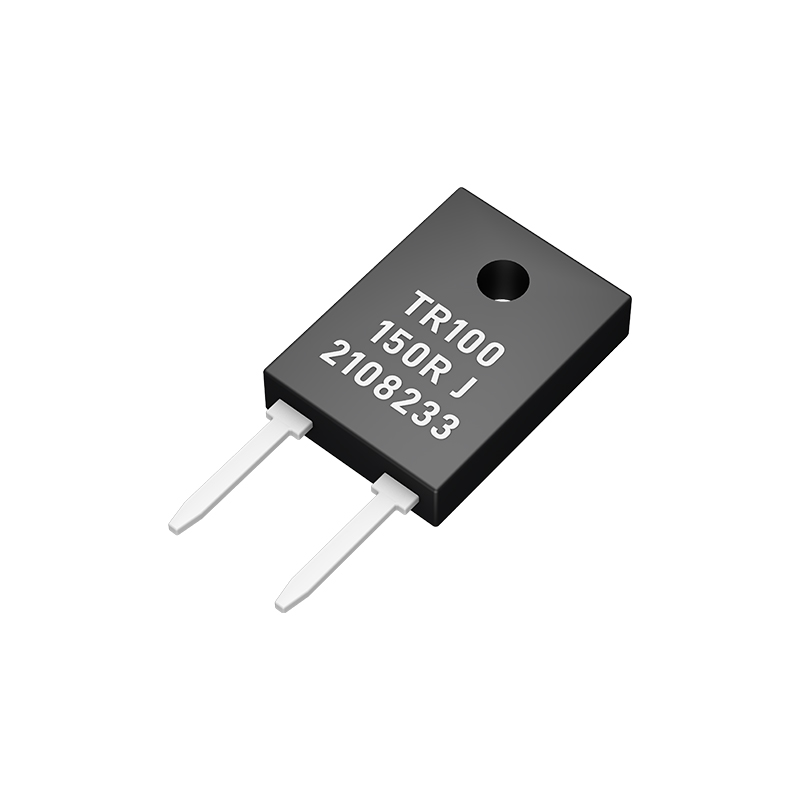
Mastering the interplay between lead forming and solderability is less about rigid formulas and more about hands-on craftsmanship. When a lead is bent too aggressively, micro-fractures can lurk beneath the surface, weakening the joint long before it reaches the solder wave. The art lies in understanding not just the mechanical limits of the material, but also how even subtle deformation can disrupt the surface finish and oxide layer, altering wetting behavior in ways that datasheets rarely capture.
Thermal relief patterns, standoff heights, and bend radii are just the starting points. Many failures trace back to the simple act of cutting or clinching leads with dull tooling, which smears the plating and introduces contaminants. A seasoned operator knows to inspect the radius of each bend under magnification, looking for the telltale grain structure changes that signal impending fracture. Sometimes the best solderability comes from doing less—minimizing handling and allowing the component's original surface chemistry to do its job.
Process discipline matters, but so does intuition. A dry joint rarely begins at the soldering stage; its roots are often found upstream in the lead preparation area. Watching how solder flows across a formed lead reveals the entire history of that component—whether it was stored properly, formed with care, or contaminated by a fleeting touch. That's where the craft enters the equation: learning to read the subtle visual cues of a properly prepared lead, and respecting the fact that solderability is a window into how a board will perform in the field.
Tolerance Matching Through Laser Trimming
Laser trimming is a precise, non-contact method used to fine-tune the electrical properties of resistors and other components. By selectively removing material with a focused laser beam, manufacturers can achieve exact resistance values or match paired elements to within a fraction of a percent. This process eliminates the need for mechanical adjustments, which can introduce stress or damage, making it ideal for high-reliability circuits where even minor deviations could compromise performance. Whether it's balancing the input stages of an operational amplifier or setting the gain in a sensor bridge, laser trimming enables a level of control that batch-processed components alone can't deliver.
In practice, the technique shines when components must operate in unison. Consider a differential pair where symmetry is critical—slight mismatches in resistance lead to offset voltages and drift. During trimming, real-time measurement systems monitor the circuit's behavior as the laser etches away material, stopping the moment the desired parameters are met. This closed-loop feedback allows for dynamic compensation of initial tolerances and environmental factors such as temperature variations. The result is not just a tighter spec on paper, but a functional improvement that holds up under real-world conditions.
Beyond single-component tuning, laser trimming also streamlines the assembly process. Rather than stocking multiple precision grades or hand-selecting parts from a distribution, designers can specify a standard component and rely on post-attach trimming to dial in the final value. This reduces inventory complexity and speeds up production while maintaining or even enhancing performance. For mixed-signal designs, where analog sections demand extraordinary accuracy, the ability to adjust a resistor network after placement sidesteps the parasitic effects of layout and solder joints. The beam's path can be programmed to trim intricate patterns, optimizing not just the resistance but also factors like temperature coefficient and long-term stability.
Thermal Drift: Why Temperature Coefficient Matters
Precision circuits live or die by stability. When components heat up—whether from ambient shifts or self-heating under load—their electrical values can wander. A resistor rated for 1 kΩ at room temperature might drift to 1.05 kΩ at 60°C. For a voltage divider setting a sensitive reference, that’s enough to push readings out of spec. This wandering is thermal drift, and it catches designers off guard because it’s cumulative and often nonlinear across operating ranges.
The temperature coefficient quantifies that drift—usually in parts per million per degree Celsius (ppm/°C) or as a percentage change over a given range. A resistor with a ±50 ppm/°C coefficient shifts 0.005% per degree, which sounds tiny until you span a 50°C delta and stack a dozen such parts in a signal chain. In metrology or sensor front-ends, choosing a 5 ppm/°C part over a 200 ppm/°C one isn’t about marginal gains; it’s about whether your measurements hold meaning after the box warms up. The coefficient also tells you if the change is monotonic or reversibly hysteretic—details datasheets won’t always volunteer but that reveal themselves in a thermal chamber.
Ignoring temperature coefficients turns potential precision into a guessing game. A voltage reference specified with a flat line on paper becomes a parabola once you factor in its TC. Calibration at one temperature does little good if the instrument operates elsewhere without compensation. Worse, matching components for differential stages relies on similar drifts; mismatched coefficients create common-mode errors that shift with every thermal cycle. When you see a seasoned engineer obsess over component selection, they’re not chasing numbers—they’re fighting drift long before it shows up on a scope.
Long-Term Reliability Under Pulse and Surge Conditions
Engineers often underestimate how even brief, high-energy transients can slowly erode component integrity. A capacitor rated for a certain voltage might survive a single surge, but repeated exposure to fast-rising pulses can progressively weaken its dielectric, leading to a gradual shift in capacitance or an increase in leakage current. This kind of hidden degradation rarely triggers immediate failure, yet it sets the stage for costly, intermittent problems down the line.
The challenge lies in balancing protective circuitry with real-world operating conditions. Clamping devices like TVS diodes and varactors absorb transient energy, but they themselves age with every strike. Over time, their response becomes sluggish, and the very components they shield start bearing the brunt. Thoughtful design considers not just the peak pulse power, but the cumulative effect of countless small hits—the kind that slowly expand micro-cracks in solder joints or thin out metallization layers inside chips.
True long-term reliability emerges when testing goes beyond datasheet limits. Simulating years of power-line surges and load-dump pulses in a compressed timeframe reveals weaknesses that standard qualification misses. When systems endure these accelerated stress profiles without meaningful drift in performance, they earn a level of trust no single-pass surge test can deliver. It’s the difference between a product that works on day one and one that keeps working through every storm.
Hidden Costs in Quality: Traceability and Certification
When companies chase certifications and traceability for quality assurance, they often underestimate the financial and operational burdens that lurk beneath the surface. Beyond the visible fees for audits and registrations, there are significant hidden costs tied to system upgrades, staff training, and the ongoing maintenance of meticulous records. These expenses rarely make it into the initial budget but can quietly erode profitability, especially for smaller firms that lack the scale to absorb them. The pressure to prove product origins and adherence to standards at every step often leads to a patchwork of software tools and manual checks, each adding layers of complexity and cost that weren't anticipated during the planning stages.
Traceability systems, in particular, bring a unique set of indirect expenses. While they promise transparency and faster recalls, the reality involves constant data entry, sensor upkeep, and the headache of integrating legacy systems with newer platforms. Each additional node in the supply chain that must be tracked multiplies the potential for errors and delays, and the cost of fixing these glitches is seldom factored into the return-on-investment calculations. Certification bodies might audit once a year, but internally, the company must perpetually audit itself—diverting skilled workers from their usual tasks to maintain the paper trail, and often needing to hire specialists who can interpret the shifting requirements of different certifying authorities.
There's also a quiet cultural and competitive toll that rarely gets discussed. When traceability and certification become table stakes in an industry, businesses find themselves trapped in an arms race of credentials, spending not to gain an edge but simply to stay in the game. The hidden cost here is the opportunity lost—the R&D projects shelved, the marketing campaigns never launched—because resources are funneled into proving what's already been done. And while the brand may benefit from a seal of approval, the day-to-day reality is often one of spreadsheet fatigue and calibration drift, where the quest for quality assurance becomes its own demanding product line.
FAQ
First, examine the materials they use—premium metal films or carbon composites make a noticeable difference in stability and noise performance. Also, look into their tolerance control; tight tolerance batches show meticulous production. Don’t overlook their testing protocols: reputable manufacturers often perform 100% automated testing rather than spot checks. Finally, their willingness to share technical data and failure rate statistics speaks volumes about transparency.
It’s all about consistency. Automated insertion and welding techniques reduce human error, while controlled coating and curing environments protect against moisture ingress. Manufacturers that use laser trimming for precise resistance values tend to produce components that hold up better under thermal cycling. Lead-forming machine calibration also matters—poorly angled leads can cause stress fractures during PCB assembly.
Yes, but with nuance. ISO 9001 is a baseline; military-grade certifications like MIL-PRF-55182 or AEC-Q200 for automotive actually require rigorous batch testing. However, some small specialized firms may not carry expensive certs yet outperform certified competitors because their niche expertise is their main focus. Auditing their in-house testing lab can be revealing.
The core resistive element defines nearly everything. High-purity ceramics for the substrate minimize current noise, while quality alloys in metal film resistors ensure low temperature coefficients. Even the termination plating matters—a proper tin-lead or lead-free finish with underplate barriers stops solderability degradation during storage. Shortcuts in material procurement can introduce long-term drift.
Ask for load life test data under rated conditions (typically 1000 hours at 70°C). Look beyond the typical ±1% change; premium products drift less than 0.1%. Accelerated damp heat tests (40°C/95% RH) also reveal potential coating weaknesses. Manufacturers that offer extended warranties or publish MTBF figures are usually confident in their product lifespan.
It’s a combination of factors: non-flammable coatings, ability to withstand high voltage pulses without degradation, and traceability down to the raw material batch. The resistor should handle transient surges gracefully and maintain values under vacuum or altitude changes. Some manufacturers design with redundant termination structures to prevent open circuits, which is critical in life-support equipment.
Often, yes. A manufacturer that can tailor lead forming, provide odd resistance values, or adjust power ratings isn’t just flexible—it shows they understand circuit design constraints deeply. Custom pulse-proof or fusible resistors require refined material layering and test engineering. If they collaborate during your prototyping stage and offer application notes, it signals they invest in long-term partnerships rather than commodity sales.
Request a sample batch and perform your own incoming inspection: measure resistance distribution and check for physical defects under magnification. Cross-section a few units to examine termination interfaces. Also, ask for a factory tour video or visit—it’s hard to fake cleanliness and disciplined production flow. Customer references from similar industries carry more weight than glossy brochures.
Conclusion
The foundation of any reliable through-hole resistor starts with the purity of the resistive material and the precision of the manufacturing process. High-grade metal alloys or carbon composites are selected not just for their nominal resistance, but also for how well they maintain that value over time and under stress. Impurities cause erratic behavior—noise, parasitic effects, and drift—that slowly degrades circuit performance. This is why top manufacturers invest in laser trimming, a technique that achieves tight tolerances without compromising the film’s integrity, ensuring precise matching to the target resistance. Equally critical is the component’s ability to resist thermal drift; the temperature coefficient must be minimized to prevent shifts in resistance as the environment changes, particularly in industrial and automotive applications where wide temperature swings are common.
Beyond the resistive element, the physical construction of the component plays an outsized role in long-term dependability. Lead forming and solderability are more art than afterthought—clean, well-formed terminations promote strong, crack-free joints that withstand mechanical vibration and thermal cycling. Reliability under pulse and surge conditions hinges on the resistor’s robust design, capable of absorbing short-term overloads without permanent damage. Yet some of the most critical quality factors lie in what the eye cannot see: comprehensive traceability and certification. These hidden costs represent an assurance chain—from raw material batch records to final test reports—that allows manufacturers to stand behind their components. In safety-critical systems, full traceability and recognized certifications are non-negotiable, transforming a simple resistor into a trusted part of a larger, certified ecosystem.
Contact Us
Contact Person: Yuying Gao
Email: [email protected]
Tel/WhatsApp: +86 18926013721
Website: https://en.milliohm.net/