

High-Quality Power Resistor Manufacturer for Reliable Electronic Performance
2026-07-24
Every circuit demands components that won’t let it down when the pressure is on. For engineers chasing dependable thermal stability and low drift in precision applications, the choice of a power resistor is more than a box on a BOM—it’s a strategic decision. At Milliohm, we build resistors that thrive under stress, delivering tight tolerances and consistent performance where mainstream alternatives fall short. This blog unpacks what truly defines a high-quality power resistor manufacturer and why reliability isn’t just a specification—it’s a hard-earned reputation.
Precision Craftsmanship Behind Every Resistor
In an era where components are often seen as interchangeable commodities, the story of a single resistor begins long before it reaches a circuit board. It starts with the careful selection of raw materials—ceramic substrates with exceptionally uniform grain structure, metal films deposited in vacuum chambers that operate at pressures measured in billionths of an atmosphere, and laser trimming systems calibrated to excise material with sub-micron accuracy. Every step is a deliberate act of precision, refusing to let tolerance be an afterthought.
What truly sets apart these resistors is an almost obsessive dedication to consistency that borders on artisanal. The resistive elements aren't merely printed or coated; they're formed through controlled sputtering processes that ensure thickness uniformity across thousands of units. Even the protective coating is applied in carefully regulated layers, never too thick to affect heat dissipation, never too thin to compromise protection. Each batch undergoes thermal cycling tests that mimic years of operational stress, with only those showing less than 0.01% drift in value earning the right to leave the factory.
Perhaps most telling is the quiet expertise of the technicians who oversee these processes—their fingers adjusting etching parameters based on subtle shifts in ambient humidity, their eyes detecting faint color variations that hint at oxide layer changes invisible to automated cameras. This marriage of human discernment with machine accuracy creates something that no datasheet fully captures: a component that behaves not as a theoretical ideal, but as a trustworthy anchor in real-world circuits where every ohm matters.
Thermal Mastery for Sustained High-Load Performance
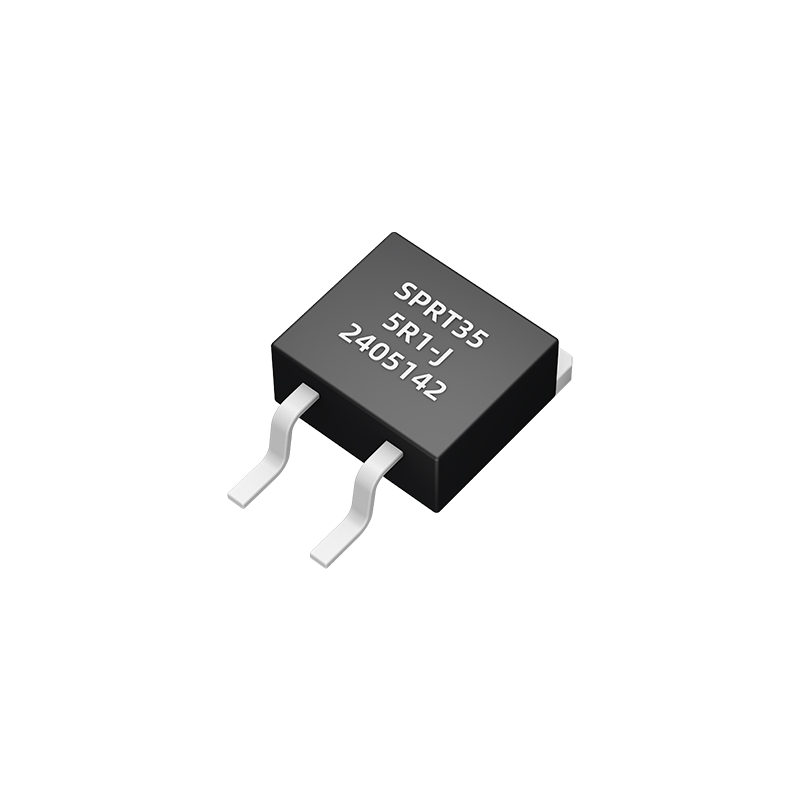
Sustained peak performance lives or dies by thermal design. When workloads push components to their limits for hours on end, even the most powerful hardware can stumble if heat isn't managed intelligently. The goal isn't merely to avoid thermal throttle—it's to create a system so thermally stable that performance curves stay flat, no matter how punishing the task. This requires a holistic approach where every element, from the microarchitecture to the cooling solution, works in concert to dissipate heat before it becomes a bottleneck.
Effective thermal mastery starts with a deliberately engineered pathway for heat to escape. Rather than relying on oversized, brute-force cooling that adds bulk and noise, modern designs use a mix of vapor chambers, precision-placed heat pipes, and dynamic airflow patterns to pull heat away from hotspots instantly. The chassis itself becomes part of the solution, with venting layouts that prevent recirculation and keep ambient temperatures around critical components low, even in confined spaces. It’s a refined, physics-driven strategy that prioritizes steady-state efficiency over short-lived bursts of cooling.
Intelligence also plays a starring role. On-the-fly adjustments to fan curves, power delivery, and even workload scheduling are driven by predictive algorithms that anticipate thermal load rather than react to it. By constantly modeling heat generation and dissipation, the system can stay whisper-quiet during light tasks and ramp up cooling preemptively when sustained heavy lifting is detected. The result is a seamless experience where high-load performance feels effortless—no sudden fan screams, no unexpected drops in frame rates or compute throughput, just unwavering capability that lets you focus on the work, not the thermals.
Material Innovations That Redefine Durability
We’ve all seen products that promise toughness but crumble under real-world use. The difference today is a quiet revolution in composite chemistry—hybrid polymers that actually heal micro-cracks through heat activation, ceramics infused with rare-earth oxides that resist thermal shock better than any forged metal, and self-lubricating alloys that laugh off decades of friction without a single drop of oil. These aren’t lab curiosities; they’re already inside jet engines, medical implants, and the phone in your pocket.
What makes these materials genuinely redefining isn’t just brute strength—it’s how they fail. A graphene-doped concrete doesn’t just crack less; it senses strain and changes opacity to warn engineers months before a collapse. Bio-based composites grown from mycelium and agricultural waste now outperform fiberglass while decomposing harmlessly when their job is done. The paradigm has shifted from resisting wear to gracefully managing it.
The most exciting part? Durability is no longer a trade-off with weight or cost. Nano-structured amorphous metals can be injection-molded like plastic yet withstand forces that shear traditional steel. Ultra-high-performance cement, reinforced at a molecular level, builds bridges meant to last 200 years with near-zero maintenance. We’re entering an era where “built to last” isn’t a marketing phrase—it’s a measurable, engineered reality quietly reshaping everything from skyscrapers to surgical tools.
Beyond Standard Testing: Our Relentless Quality Assurance
Testing isn’t a checkbox we tick at the end of a project. It’s woven into every stage of our work, from early prototypes to final launches. Our engineers treat edge cases like puzzles worth solving, not obstacles to avoid. That mindset catches issues long before they become real problems, turning quality assurance into a creative discipline rather than a routine chore.
We’ve built a culture where “works on my machine” is never good enough. Our test environments mirror the chaos of the real world—flaky networks, outdated devices, unexpected user behavior. By constantly stressing the product under conditions that feel borderline unreasonable, we uncover weaknesses that standard scripts miss. It’s quality assurance that refuses to trust assumptions and insists on proving resilience.
Automation handles the repetition, but human judgment spots the subtleties. Our team blends exploratory testing with rigorous regression cycles, always questioning whether the experience feels right, not just whether it technically functions. This relentless combination means we’re not just shipping software—we’re delivering confidence, one carefully examined detail at a time.
Powering Diverse Industries with Tailored Resistive Solutions
From automotive systems to renewable energy, resistive components are quietly shaping the way modern industries operate. Rather than offering one-size-fits-all parts, we design solutions that align precisely with the thermal, electrical, and mechanical demands of each application. This attention to detail ensures that every resistor—whether it handles high inrush currents or precise current sensing—contributes directly to system longevity and stable performance under real-world conditions.
In industrial automation and power distribution, off-the-shelf components often fall short when faced with harsh environments or non-standard load profiles. Our approach focuses on customizing resistance values, power ratings, and form factors so that equipment can handle voltage fluctuations, repetitive stress, and extreme temperatures without compromise. By embedding protection and durability into the material choices and construction methods, we help operators reduce unplanned downtime and maintenance cycles over the long term.
Medical devices and instrumentation rely on resistive sensing for safety-critical measurements, where even minor drift can lead to significant errors. We work closely with device manufacturers to develop ultra-stable, low-noise resistors that maintain their precision across varying humidity and thermal conditions. These tailored solutions not only meet regulatory requirements but also simplify circuit design—removing the need for complex compensation networks and allowing engineers to focus on the core functionality of their products.
Built to Endure: Reliability Over Decades of Operation
When engineers design equipment for industrial environments, they often talk about "service life" in theoretical terms—calculated under ideal lab conditions. The reality, though, is far messier. True reliability isn’t just about surviving a stress test; it’s about waking up every morning, year after year, in a dusty, vibrating, thermally cycling plant, and still performing exactly as designed without anyone having to think twice about it.
We’ve seen systems installed in the early 2000s that haven’t missed a beat. Their secret? It’s not one big innovation, but hundreds of small, almost boring decisions: derating components so they run cooler, choosing connectors that can handle twice the mating cycles you’d ever expect, and designing firmware that degrades gracefully instead of crashing. These are the things that never make it into a brochure, but they’re what keep critical processes online when budgets are tight and replacement cycles get extended from five years to fifteen.
What’s often overlooked is that reliability over decades changes the economics of an installation. When you can trust a piece of equipment to outlast the building it’s housed in, you’re not just saving on spare parts. You’re eliminating entire categories of risk—unplanned downtime, rushed maintenance, and the cascading failures that happen when one aged component finally gives up. That peace of mind is something no amount of predictive analytics can fully replace; it has to be baked into the hardware from day one.
FAQ
A high-quality power resistor stands out through its ability to manage significant power levels with minimal drift, robust construction, and reliable performance under thermal stress. Materials like thick film on ceramic or wirewound on heat-sinking substrates are often used, along with precision welding and protective coatings.
Manufacturers enforce rigorous testing protocols including burn-in, thermal cycling, overload simulations, and aging tests. They also employ statistical process controls during fabrication and use premium raw materials to reduce early failures and extend service life.
They are essential in power supplies, motor drives, braking systems, inrush current limiters, battery management, and renewable energy inverters. Any circuit that demands stable dissipation and voltage division under high stress relies on quality power resistors.
Advanced ceramic cores, aluminum housings with fins, and metal-clad designs enhance heat dissipation. Some devices incorporate heat sink plates or forced-air cooling compatibility to keep junction temperatures low and maintain resistance stability.
Low inductance is crucial for high-frequency applications like snubbers and RF loads to avoid ringing and energy storage. Manufacturers tailor winding techniques—Ayrton-Perry, bifilar, or non-inductive winding—to minimize parasitic effects without compromising power handling.
Custom form factors, terminations, resistance values, and mounting options let designers integrate resistors seamlessly, reduce board space, match unique thermal profiles, and solve mechanical constraints, leading to faster time-to-market and optimized end-product performance.
Look for ISO 9001, IATF 16949 for automotive grade, UL recognition, and RoHS/REACH compliance. These demonstrate commitment to quality management, environmental responsibility, and consistent production—key factors when sourcing components for safety-critical or high-volume products.
Conclusion
As a dedicated high-quality power resistor manufacturer, we engineer every component to deliver unwavering reliability in the most demanding electronic systems. Our approach begins with precision craftsmanship—each resistor is meticulously assembled and trimmed to exacting tolerances, ensuring consistent performance from the first unit to the millionth. This attention to detail is reinforced by material innovations that redefine durability: we utilize advanced alloy blends and proprietary coatings that withstand thermal shock, humidity, and corrosive environments far beyond conventional designs. By mastering thermal dynamics, our resistors maintain stability under sustained high-load conditions, dissipating heat efficiently through optimized geometries and substrate interfaces. This thermal mastery means your circuits stay protected even during prolonged overloads, preventing drift and premature failure.
But our commitment goes deeper than individual components. We subject every batch to testing protocols that exceed industry standards—cycling through extreme temperature ranges, vibration profiles, and accelerated life simulations to expose potential weaknesses before they reach your application. This relentless quality assurance empowers us to serve diverse industries with tailored resistive solutions, whether for precision instrumentation, renewable energy inverters, or heavy-duty motor drives. The result is a product built to endure decades of operation, backed by real-world field data proving mean time between failures that competitors can only aspire to. When you partner with us, you're not just buying resistors; you're investing in a legacy of reliable electronic performance that keeps your systems running year after year, without compromise.
Contact Us
Contact Person: Yuying Gao
Email: [email protected]
Tel/WhatsApp: +86 18926013721
Website: https://en.milliohm.net/