

Custom Electric Heater Supplier: Tailored Heating Solutions for Your Unique Needs
2026-07-27
Finding the right electric heater for specialized applications can be a challenge when off-the-shelf products fall short. As a leading custom electric heater supplier, Shenzhou Chemical Industry transforms complex heating requirements into precision-engineered solutions. Whether you need unique shapes, materials, or performance characteristics, our tailored designs ensure optimal efficiency and reliability. Dive into how customized heating technology can solve your toughest thermal challenges.
Your Specifications, Our Starting Point
We don't believe in forcing your vision into our mold. Instead, every project begins with a deep dive into your unique requirements, ensuring that our solutions are shaped entirely around what you need—not what we have on the shelf.
This approach means we treat your specs as the blueprint, not an afterthought. From material choices to final dimensions, each detail you provide drives our design and production process, so the end result is a seamless extension of your original concept.
By anchoring our work in your exact specifications, we eliminate guesswork and deliver outcomes that match your intentions perfectly. It’s a collaborative effort where your input defines every step, turning your starting point into our shared finish line.
Designing Heaters That Disappear Into Your System
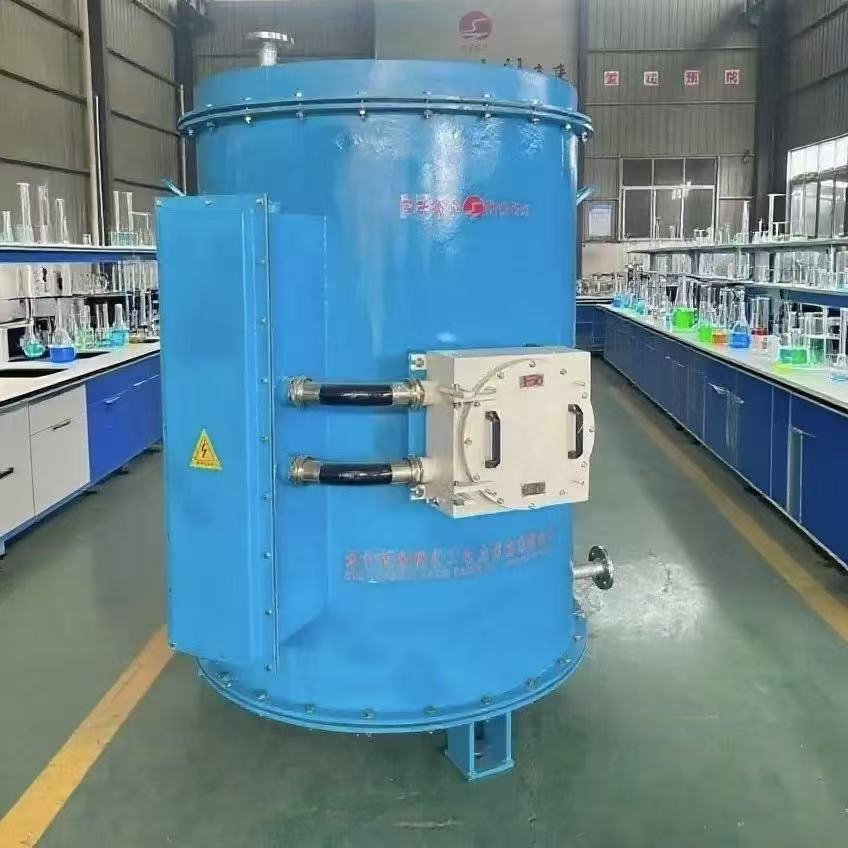
Heaters are often bulky afterthoughts, but modern design demands they blend seamlessly into the equipment they serve. Achieving this requires a shift in how we think about thermal components — not as standalone devices, but as integrated elements of the overall assembly. By embedding heating traces directly into structural parts or using thin-film technology, the heater becomes virtually indistinguishable from the material around it.
The challenge lies in maintaining performance without sacrificing the clean lines of the system. Careful material selection and precise thermal modeling allow the heating element to operate efficiently while hidden under layers of insulation or within the walls of a fluid channel. The goal is to make the user completely unaware of the heater’s presence, experiencing only the consistent warmth it provides.
When done right, these invisible heaters enhance both form and function. They eliminate external protrusions, reduce points of failure, and simplify cleaning. For applications ranging from medical devices to consumer appliances, this design approach offers a competitive edge by delivering reliable heat without visual clutter.
Tolerances That Matter: Precision in Every Coil
In coil manufacturing, the difference between flawless function and frustrating failure often comes down to tolerances measured in microns. These aren't just numbers on a spec sheet—they're the quiet guarantees that a spring will compress exactly as designed, a sensor coil will pick up a fragile signal, or a filter mesh will stop particles down to a specific size. Making this precision repeatable, coil after coil, demands not only sophisticated machinery but a deep understanding of how raw materials behave under tension, temperature, and time. Each coil is a small testament to the idea that real consistency isn't achieved by accident.
What complicates the pursuit of tight tolerances is the interplay between wire diameter, coiling speed, and post-winding treatments. A variance of a few micrometers in wire thickness can cascade into unpredictable pitch diameters and uneven force distribution. To counter this, modern coiling operations integrate in-line measurement systems that feed back adjustments in real time, often before the coil fully forms. But technology alone isn't enough—operator expertise remains central, especially when dealing with exotic alloys that might spring back unpredictably after forming. It's this blend of human judgment and automated precision that defines what it means to hold a tolerance that truly matters.
Beyond the technical challenge, ultra-precise coils unlock possibilities in fields where margins are unforgiving. In medical devices, for instance, a coil with a tightly controlled outer diameter might serve as the reliable guidewire tip that navigates delicate vasculature. In aerospace, a precisely ground compression spring might be the only thing keeping a critical valve from fluttering under extreme vibration. These aren't hypotheticals—they're everyday realities where a slight deviation could mean degraded performance or, worse, a cascade of system failures. The real measure of manufacturing quality isn't just meeting a tolerance on paper; it's ensuring that every coil leaving the floor carries with it the certainty that it will perform as expected, in places where nobody gets a second chance.
From Cryogenics to Industrial Ovens: One Supplier
It’s not every day you come across a company comfortable working at both -196°C and +1200°C. But that’s exactly where we operate—in the full thermal range that spans cryogenic freezing for sensitive biological samples all the way to high-temperature industrial ovens built for heavy-duty production lines. Instead of juggling multiple vendors with different lead times and support teams, you get a single engineering partner who understands thermal control as a continuous spectrum, not isolated niches.
Our team cut its teeth on cryogenic systems, where every degree matters and thermal shock can ruin a batch. That same obsessive attention to temperature uniformity now shapes how we design curing ovens for composites, annealing furnaces for metals, and drying tunnels for coatings. By keeping design and service in-house across the entire temperature spectrum, we avoid the finger-pointing that happens when a cryo specialist and an oven builder each blame the other for a project hiccup. One call gets you someone fluent in both liquid nitrogen circulation and PID loop tuning on a 500 kW heater array.
What really sets this apart, though, is the cross-pollination of ideas. Insulation breakthroughs from our cryo vessels have trimmed energy use in our hot-oil heaters. The airflow modeling we developed for batch ovens now ensures even cooling rates in blast freezers. When you trust one supplier with the coldest and hottest parts of your process, you stop fighting compatibility issues and start discovering efficiencies that were hidden in the cracks between disciplines.
When 'Standard' Just Won’t Do
There’s a certain comfort in following the beaten path—off-the-shelf solutions promise familiarity and ease. But comfort rarely leads to breakthroughs. When your project demands a voice that isn’t an echo of a thousand others, the pre-packaged option starts to feel like a borrowed suit: it covers the basics, but it will never fit quite right. The moment you realize that your vision can’t be squeezed into a template is the moment you know it’s time to stop settling.
Custom work isn’t just about tweaking colors or swapping out images. It’s about building something that mirrors the nuanced way you think and the specific problems you’re solving. Standard tools ask you to adapt your process to their limitations. When that’s no longer acceptable, the only way forward is to flip the script—let the solution adapt to you. That shift often feels risky, but it’s where the real magic hides, in the gaps that generic products can’t bridge.
And then there’s the quiet satisfaction of knowing that what you’ve created can’t be found anywhere else. It’s not about being different for the sake of it; it’s about respecting your ideas enough to give them the framework they deserve. When “standard” loses its appeal, you’re no longer just looking for a tool—you’re ready to craft an experience that stands alone.
Partners in Problem-Solving, Not Just Parts
We’ve always believed that real value comes from understanding the challenge behind the component. When you approach us with a specification, we don’t just reach for a catalog—we ask what you’re trying to achieve, what led you to this point, and where you see the project going. That conversation often uncovers overlooked details that turn a simple part order into a meaningful upgrade in performance, cost, or reliability.
This mindset shapes how we work with every client. Instead of treating your inquiry as a transaction, we see it as the start of a collaboration. Our team stays engaged from prototype through final assembly, offering adjustments, alternatives, and hands-on support that a standard part supplier rarely provides. The result is a solution that fits the larger picture, not just the bill of materials.
Over the years, this approach has earned us partnerships that extend far beyond a single project. We’ve become a go-to resource for engineers who need more than off-the-shelf answers—people who value a second set of eyes on a stubborn problem or a fresh idea that a catalog can’t offer. That’s the difference when your supplier considers itself part of your team, not just a source for parts.
FAQ
We build a diverse range—cartridge, band, flexible, immersion, air duct, and circulation heaters. Each one is designed from scratch to match your exact wattage, voltage, dimensions, and sheath material needs.
If standard options don't fit your space constraints, temperature range, or watt density targets, a custom design becomes the practical choice. We start with a detailed review of your specs to confirm feasibility before any commitment.
Absolutely. Our engineering team collaborates directly with yours, using your CAD files, thermal simulations, or even rough sketches to develop a heater that integrates seamlessly into your existing assembly.
We support a broad spectrum—medical device manufacturing, semiconductor equipment, food processing, packaging machinery, aerospace composites, and energy systems. If it involves controlled heat, we've likely built something for it.
Turnaround varies by complexity. A simple adaptation might take two weeks, while an entirely new design with special materials and testing can span six to eight weeks. We keep you updated with weekly progress snapshots.
Yes, we encourage prototyping to validate performance before scaling up. Low-volume production runs are no problem; we treat each prototype order with the same attention as a full production batch.
Sheath materials include stainless steel, Incoloy, titanium, and PFA-coated aluminum, chosen based on corrosion resistance, temperature limits, and purity requirements. Insulation options range from mineral oxide to mica and ceramic.
Every unit undergoes electrical testing, dielectric withstand checks, and thermal imaging verification. We maintain traceable records for materials and processes, and our in-house life-cycle testing can simulate years of field use.
Conclusion
True customization begins where off-the-shelf options end. Our process starts with your specifications—no matter how unusual—and builds from there. Whether you need a heater that vanishes into a complex assembly, operates within micron-level tolerances, or withstands extremes from cryogenic chill to industrial oven heat, we engineer solutions that align precisely with your system's geometry and performance demands. Every coil, every element is crafted to deliver repeatable accuracy because we recognize that in your application, deviation isn't an option.
When standard catalog items fall short, we step in as a collaborative partner, not just a parts vendor. Our engineering team dives deep into your thermal challenges, designing heaters that integrate seamlessly and solve real-world problems. From rapid prototyping to full-scale production, we adapt to your pace and requirements, ensuring you get a heating element that feels like an extension of your own design—not an adaptation. It's a level of partnership that transforms unique needs into reliable thermal performance, time after time.
Contact Us
Contact Person: Mr. Wang
Email: [email protected]
Tel/WhatsApp: 8613705299955
Website: https://vip.e-baixing.com/szhgyw