

China DC Combiner Box Selection Tips for Reliable Solar Systems
2026-10-16
Most solar failures don’t start on the roof. They start inside a box that rarely gets a second look: the DC combiner box. Choose wrong, and you’re inviting arc faults, overheating, and unnecessary downtime into an otherwise solid PV system. This guide cuts through the noise with practical selection tips for China-made DC combiner boxes—breaking down what actually matters for long-term reliability, from busbar design to IP ratings. Whether you’re sourcing for a commercial array or a residential project, you’ll learn how to spot the difference between a box that just looks good and one that holds up. Chang Song brings years of field-tested manufacturing into focus, helping you make a confident choice.
Start With the Ratings That Actually Matter
Everyone loves a five-star score, but raw ratings rarely tell the whole story. What you need to focus on first are the ratings that align with your actual use case. For instance, if you stream a lot of video, prioritize screen quality and battery life over raw processing power. If you travel frequently, weight and durability matter more than a slightly faster chip. Ignore the noise of general averages and zero in on the specific attributes reviewers consistently praise or complain about.
Another layer that often gets overlooked is the distribution of ratings over time. A product with a 4.6 average might look great, but if the last six months show a steady decline, something has changed—maybe a newer batch has quality issues or a software update botched performance. Look for patterns: a sudden spike in one-star reviews usually points to a specific defect, while a slow drift downward suggests long-term reliability concerns. These trends are far more useful than the single number on the product page.
Finally, weigh the credibility of the people behind the ratings. Verified purchase badges help, but they aren't foolproof. Dive into a handful of detailed reviews—both positive and negative—and see if the writers mention the same pros and cons you care about. A reviewer who complains about a laptop's gaming performance probably isn't relevant if you only need it for spreadsheets. Matching the reviewer's context to your own is the quickest way to turn noisy star counts into a decision tool that actually works.
Check the Enclosure Before It Rusts Away
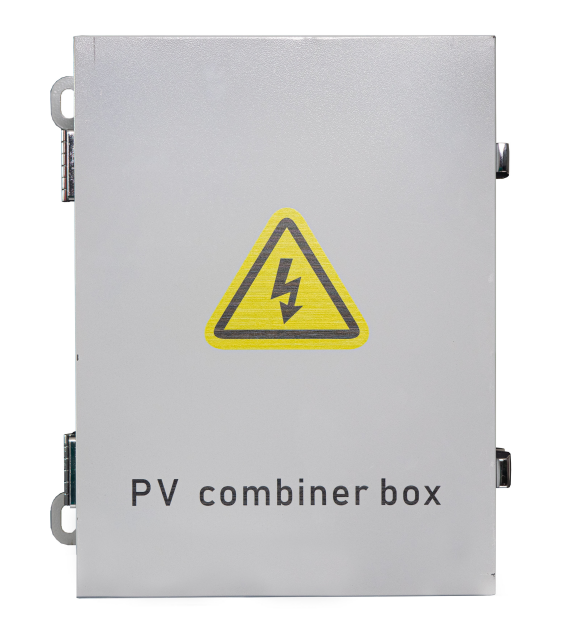
Rust doesn’t announce itself with a bang. It creeps along seams, gathers under bolt heads, and waits where paint has been scratched down to bare metal. Before you trust an enclosure to keep moisture out for another season, run your fingers along the bottom lip and around mounting tabs. If the surface feels rough or flaky, that’s not just cosmetic wear; it’s the outer layer already losing its fight against oxidation.
Pay closest attention to the spots nobody sees from eye level. Drain holes, hinge recesses, and the back side of latches tend to collect dampness long after the rest of the housing has dried. A flashlight held at a low angle will expose pitting and bubbling that a quick glance misses. When you find early rust, don’t just paint over it. Remove the corrosion, treat the bare metal, and reseal the edge before water finds a permanent way in.
Make this check part of your routine maintenance rather than an afterthought. An enclosure that still looks solid on the outside can quietly weaken from within, and replacing a rusted-through shell costs far more than an afternoon of inspection and touch-up. Catching the problem early keeps the housing intact, the seal tight, and the inside protected for years longer.
Don't Overlook Fuse and Breaker Quality
An undersized or counterfeit fuse doesn't just fail quietly — it can let a fault ride long enough to damage upstream equipment. Good breakers are judged by how predictably they trip after hundreds of cycles, not just by their stamped amperage. If a device's time-current curve has never been verified against your actual load profile, you are trusting a datasheet hope rather than a tested behavior.
Pay attention to interrupting ratings. A 20-amp breaker that cannot safely clear the available fault current on a branch circuit is little more than a switch with a false promise. Quality fuses and breakers use consistent arc chutes, proper contact pressure, and materials that do not weld or degrade under repeated short-circuit stress. This is why two parts with the same voltage and current rating can behave completely differently in a real panel.
For anything that feeds motors, drives, or battery systems, fuse and breaker choice should be part of the design review, not an afterthought. Keep a small batch of known-good devices for substitution testing, and reject lots with inconsistent labeling or excessive contact resistance. It is cheaper to replace a suspicious protective device than to explain why a known fault turned into a burned busbar.
Add Surge Protection Without Overthinking
Most people overcomplicate surge protection, assuming it demands a specialist or a full-home rewiring. That’s rarely the case. A decent power strip with a high joule rating—look for at least 2000 joules—handles the majority of everyday spikes from appliances cycling on and off. Plug your sensitive gear into it and move on.
For electronics you actually care about, skip the cheapest surge strips that feel flimsy; the internal metal oxide varistors wear out silently after a few big hits. If a strip has a “protected” LED that’s gone dark, it’s just a regular power bar now. Replace it without agonizing over brand loyalty or specs you don’t understand.
Whole-house surge protectors at the breaker panel sound impressive, but they’re only worth the extra cost if you live somewhere with frequent storms or unreliable grid power. Otherwise, a layered approach—one good strip per workstation or entertainment center—is enough. Don’t let perfectionism stop you from doing the simple thing today.
Busbar Layout Changes Everything on Site
You can walk onto a busy project site and immediately spot the difference when busbar routing has been thought through properly. Instead of trays crammed with cables snaking haphazardly across ceilings, you see clean, deliberate lines of copper or aluminum that look almost architectural. That visual order translates directly into less time spent tracing circuits, fewer accidental cuts during later trades' work, and a much smoother handover when testers come through. It's one of those rare design choices where aesthetics and function pull in the same direction.
On a recent retrofit, the original panel schedule had six separate feeders running parallel for over forty meters just to reach the same distribution area. By rethinking the busbar layout, we collapsed those into a single trunk with tap-off boxes at exactly the load centers. The electricians saved two full days of pulling and dressing cable, the firestopping contractor had far fewer penetrations to seal, and the client ended up with accessible capacity for future changes without messy improvisation. The layout itself did the heavy lifting.
What rarely gets talked about is how much on-site decision fatigue disappears once the busbar path is locked in logically. Foremen stop haggling over which route is shorter or whether a particular bend is acceptable. Apprentices learn faster because the routing makes sense visually. Even the safety walkthroughs become quicker — you're not climbing over sagging cable bundles or squeezing into corners with unknown clearances. A well-planned busbar layout doesn't just change the electrical drawing; it changes the whole rhythm of work on site.
Verify Certifications Beyond the Sticker
A sticker on a product or website can be copied in minutes. Before you trust a certification claim, look up the issuing body and confirm it actually exists and has a track record in that field. Many fake credentials use names that sound official but lead nowhere when searched.
Ask for a license or certificate number, then run it through the issuing organization's public registry. If the database is missing, hard to navigate, or the number doesn't match the name, treat that as a red flag. Legitimate certifiers typically make verification straightforward.
When in doubt, contact the certifying agency directly using contact details from their official website—not the phone number printed on the sticker. A quick email or call can save you from relying on a badge that was never earned.
FAQ
Look beyond the marketing claims and open up the enclosure if possible. The busbars should be tinned copper, not bare aluminum, and all terminal screws need serrated washers or locking compound. Silicone gaskets around the lid are more reliable than foam strips for keeping condensation out during rapid temperature changes.
Most residential inverters accept two or three MPPT inputs, so a combiner with four to six string inputs is usually enough. Don't oversize it just because the box is cheap; unused fuse holders collect dust and create unnecessary failure points.
IEC 61439-2 is the baseline, but for 1500V DC you'll want to see a type test certificate that includes temperature rise tests at full rated current. Some Chinese suppliers will show a CB scheme certificate, but ask for the full test report and check that the short-circuit withstand rating matches your array's fault current.
Fuses are still the most reliable for overcurrent protection because they don't have mechanical parts that can weld shut. But if the combiner box is in a remote location where maintenance is hard, a breaker lets you isolate a faulty string without having to pull fuses wearing arc-flash gear. In that case, choose a breaker with a magnetic trip element rated for DC, not a re-labeled AC breaker.
Check the wall thickness with calipers if you have access; anything under 1.5mm for galvanized steel or under 2.5mm for aluminum is suspect. Welds should be continuous, not spot welded. Also lift the lid and look at the hinge pins—plastic hinges on a box marketed as outdoor-rated are a red flag.
For areas with frequent lightning, especially in southern China, you need at least a Type 2 SPD on the combined output bus. If the array is on a metal roof or has long DC cable runs, individual string-level SPDs add a second layer but increase maintenance because every SPD has a finite lifespan and needs visual inspection.
Ideally the combiner box should have a DC current sensor per string, not just voltage, and it should communicate via RS485 or a wireless mesh. We've found that a local touchscreen for commissioning saves hours, even if the main monitoring is cloud-based. Make sure the supplier can provide Modbus register maps without signing an NDA.
A quick rule of thumb: for copper busbars carrying 100A continuous, you want at least 30mm x 3mm cross-section, and they should be spaced at least 10mm apart for heat dissipation. If the manufacturer uses plated steel instead of copper, add 40% more cross-section. Also check that the busbar supports are ceramic or glass-filled nylon, not plain PVC, to avoid warping.
Conclusion
Choosing a DC combiner box for a solar installation in China often comes down to details that are easy to miss until a fault shuts down the string. Start with the electrical ratings that match your actual string voltage and current under worst-case temperature swings, not just the nominal numbers on the datasheet. A box rated too close to operating limits will age faster, especially with high DC voltages common in commercial rooftops. The enclosure deserves equal attention: powder-coated steel may look fine in a brochure, but coastal humidity or industrial air can eat through weak spots around hinges and cable glands. Look for sealed gaskets, proper IP ratings, and drainage that doesn't let condensation pool near live parts. Inside, the quality of fuses and breakers is not the place to save money. Cheap holders arc or lose clamping force after thermal cycling, and a failed fuse can take out more than one string if the holder melts. Adding DC-rated surge protection is straightforward but often overthought: choose a device sized to the system voltage and install it close to the busbar, with short leads and a clear status indicator, rather than chasing the highest kiloamp rating.
Busbar layout is where field teams feel the difference immediately. A crowded, single-row busbar forces awkward cable bends and leaves no room for a torque wrench on lug nuts, which leads to loose connections and hot spots. Look for a design that separates positive and negative paths, leaves dedicated space for the main breaker, and allows each string to land without crossing over others. This speeds up commissioning and makes later troubleshooting far less painful. Certifications deserve a hard look beyond the printed logo. Some suppliers show a CE or TUV mark that belongs to a single component, not the assembled box. Ask for a test report or certificate number that covers the enclosure with the exact busbar and breaker configuration you are buying, and verify it with the issuing body if possible. A reliable combiner box is a system, not a collection of parts, and the selection should reflect that.
Contact Us
Contact Person: Tonglun Chen
Email: [email protected]
Tel/WhatsApp: 8618906642555
Website: https://www.cncsele.com